
1 Governance
To effectively embed ESG principles across our organization, we have established clear roles and responsibilities to ensure alignment, accountability, and active participation in our sustainability goals.
1.1 Role of Board of Directors
The Board of Directors holds ultimate responsibility for Datwyler's ESG strategy and reporting, supervising the Executive Committee and tracking progress towards goals, including employee incentives tied to climate targets. The sustainability report, which includes Datwyler's climate objectives, is reviewed and approved by the Board annually. Climate-related topics are discussed at any Board meeting when necessary.
1.2 Role of Executive Committee
While the Board oversees the sustainability strategy, the Executive Committee ensures the implementation, particularly in relation to climate issues. The CEO oversees risk assessments and manages budgets for climate initiatives. The CEO works closely with the Chief Sustainability Officer (CSO), who ensures the implementation of sustainability activities, including the development of the climate transition plan and the integration of climate-related considerations into the company's strategy. The CSO also works closely with Datwyler's Global Sustainability Team, which oversees sustainability efforts across all plants. The Sustainability Team, supported by EHS officers at the sites, is responsible for assessing climate risks and opportunities, monitoring progress on climate targets, and managing climate-related value chain engagement.
More detailed information on business integration can be found in the Sustainability Report.

To strengthen the focus on sustainability, the Board has integrated sustainability metrics into the company's variable incentive model. These indicators, accouting for 20% thereof, have applied to the Executive Committee and eligible employees since 2022. Three sustainability metrics are used, with greenhouse gas (GHG) reduction being weighted at 50%. This incentivizes employees to contribute to Datwyler's target of achieving climate-neutral operations by 2030.
2 Strategy
2.1 Identified climate-related physical and transition risks and opportunities
A distinction is drawn between physical and transitional climate-related risks. Physical risks arise from direct climate events, impacting operations, while transition risks arise from the decarbonization of the economy or from the resulting legal, social, economic or technological framework conditions. Datwyler assessed risks and opportunities in both categories and categorized them into short-term (1-3 years), medium-term (3-10 years) or long-term risks (10-30 years).
Physical risks were assessed using data-based tools like the WWF Risk Filter Suite or Thinkhazard, local and regional hazard-specific risk maps and interviews with the responsible on-site personnel. Transition risks and opportunities were assessed by internal stakeholder input, market screening, benchmarking and literature reviews.
2.2Physical risks
Datwyler's relevant physical risks are summarized in pairs of chronic and acute risks, as they can be characterized and described in conjunctions. The risks identified are presented at an aggregated level, although we recognize that the assessments of the individual sites are heterogeneous. Further, Datwyler is fully aware of the interrelation of certain risks, like water scarcity and hot temperatures, and associated risks that are not explicitly addressed, like wildfires as extreme outcomes of water scarcity. These and further physical risks are part of Datwyler's regular business continuity and risk assessment.
Changing temperature (chronic) and heat (acute)
Characterization
short, medium and long term
very likely
small to medium impact
upstream and own operations
Description and impact
Higher temperatures pose risks to all business units, impacting employees' health, increasing energy demand for cooling systems, and potentially causing production disruptions. Improving energy efficiency is essential to counter rising operational costs and maintain safe working conditions.
Approach
Datwyler is addressing rising temperatures by upgrading cooling systems, improving ventilation and implementing heat-related safety measures for employees, such as longer breaks in heat periods. At the same time, Datwyler invests in increasing energy efficiency to minimize production disruptions and manage increased energy consumption.
Water scarcity (chronic) and drought (acute)
Characterization
short, medium and long term
likely
medium impact
upstream and own operations
Description and impact
Regional water scarcity and occasional droughts pose a climate-related risk for operations, particularly impacting Healthcare production sites, where indirect costs may rise. Water-intensive processes in the upstream value chain are also vulnerable, with some plants already experiencing water availability challenges.
Approach
To mitigate this risk, Datwyler is implementing water-efficient processes, recycling systems, and exploring alternative sources, such as soil extraction. Conducting water risk assessments is a key strategy, although this issue is not yet widespread across all operations.
Extreme weather (chronic) and related (acute) flooding, tropical cyclones etc.
Characterization
short, medium and long term
likely
medium impact
upstream and own operations
Description and impact
Increasingly frequent extreme weather events, such as intense wind or heavy rainfall, are a growing risk to the value chain. Flood risks increase and endanger human safety, disrupt supply chains and threathen property, causing economic losses. Widespread storms and coastal flooding associated with tropical cyclones threaten infrastructure, logistics and entire communities with direct physical damage or detrimental effects, for example on water and energy supply.
Approach
Datwyler strengthens facilities in high-risk areas and diversifies supply chains to adapt to extreme events. Key strategies include supply chain risk management through dual sourcing, regional contingency planning and building location-specific expertise to ensure continuity and minimize financial impact.
2.3 Transition risks and opportunities
Like the physical risks, transition risks and opportunities are presented on an aggregate level while being subject to deviances between regions, markets, etc.
Risks
Reputational damage
Characterization
medium and long term
unlikely
medium to high impact
own operations
Description and impact
Reliance on fossil fuel-derived raw materials poses reputational risks as stakeholders increasingly emphasize sustainability and emission reductions, especially among customers with ambitious climate goals. Incidents, such as oil leaks, could further damage environmental perception, though this challenge is industry-wide and affects all market participants similarly.
Approach
Datwyler is advancing projects aimed at reducing fossil fuel reliance in elastomer manufacturing and is exploring the use of recycled materials, focusing on repurposing manufacturing scrap into new components. Global alignment of sustainability goals is prioritized to ensure consistency, enhancing Datwyler's resilience and distinguishing its reputation in sustainable innovation.
Strong regulatory constraints
Characterization
medium and long term
likely to very likely
medium impact
upstream and own operations
Description and impact
Climate-related regulations imposing costs on greenhouse gas emissions at Datwyler's production plants could raise operational expenses. Potential material bans also present a risk, prompting Datwyler to proactively seek alternatives.
Approach
Datwyler reduces GHG emissions to lessen reliance on carbon certificates, aligning closely with its ambitious renewable electricity goals. Additionally, the company continuously monitors regulatory trends to stay prepared and proactively addresses potential restrictions on materials.
Increased cost of raw materials and market demand shifts
Characterization
short and medium term
very likely
high impact
upstream and downstream
Description and impact
Datwyler relies on specialized raw materials, and shifting market preferences, regulations or supply chain disruptions could increase material costs, presenting a financial risk. Availability may also be impacted by geopolitical factors, potentially leading to shortages in essential inputs like synthetic rubber.
Approach
Datwyler regularly re-evaluates its supply chain and raw materials as well as market demands and customer preferences, actively seeking and adopting alternatives to ensure resilience. For example, while dual sourcing or market analyses are priorities to mitigate risks, Datwyler also focuses on improving material efficiency and reducing waste.
Risk of technology obsolescence
Characterization
medium and long term
unlikely to likely
small impact
own operations and downstream
Description and impact
The shift toward lower-emission alternatives may reduce demand for certain products, potentially impacting Datwyler's revenue and requiring investment. As industries increasingly prioritize sustainability, new applications are expected to emerge, favoring solutions with minimal fossil carbon content.
Approach
Datwyler is committed to the continuous development of products and services, gradually introducing new offerings while phasing out older ones to support customer transitions toward sustainability. For example, Datwyler is developing new sustainable products. Careful timing of product introductions is critical, as substituting old products does not automatically guarantee better suitability for evolving needs.
Opportunities
Enhancing a strong reputation
Characterization
medium term
likely
medium impact
own operations and downstream
Description and impact
Datwyler's commitment to sustainable operations and value chain practices is expected to attract customers prioritizing sustainability in their supply chains. While sustainability influences sourcing decisions, Datwyler must balance its commitments to avoid increased costs or losing its competitive edge. Sustainability's reputational importance varies globally but maintaining strong practices can help secure business in the future.
Approach
By proactively engaging in sustainability efforts, transparent disclosures and achieving high ratings, Datwyler strengthens its position and differentiates itself in the market. Adapting offerings and timing to align with each market's regulations allows sustainability to serve as a unique selling point.
Renewable energy adoption
Characterization
short to medium term
very likely
medium to high impact
own operations
Description and impact
Transitioning to renewable energy could provide Datwyler with a competitive advantage and strategically buffer rising fossil fuel costs. However, this must be well balanced with the feasibility of a strict transition or required energy storage capacity, as the financial impact may be significant; purchasing renewable electricity from the market still exposes the company to some price fluctuations.
Approach
Datwyler has a clear transition plan that meets both economic and environmental requirements and is well on track to achieving 100% renewable electricity in 2030. The energy transition is a core part of Datwyler's resilience strategy, including the expansion of energy partnerships.
Diversifying business activities
Characterization
medium to long term
very likely
high impact
own operations and downstream
Description and impact
Regulation following international agreements, like the Paris Agreement, or disruptive developments like new technology foster changing and evolving markets. These are subject to regional differences but offer potentially growing revenues and market shares.
Approach
Datwyler identifies related market opportunities and explores new market niches. Datwyler emphasizes diversifying business activities and agility and employs a tailored approach to broaden addressable market potential.
Development of new products
Characterization
short to medium term
likely
medium to high impact
own operations and downstream
Description and impact
Diversifying business activities goes hand in hand with developing new innovative products that could reduce the demand for fossil fuels in the elastomer manufacturing process. As creating entirely new markets is unlikely, it is more feasible to develop new products or services within existing markets.
Approach
Datwyler is actively exploring new and alternative raw materials, along with developing fossil-free materials. Eco-design checklists are integrated into the product design process, aiming for global solutions that advance sustainability, such as sourcing sustainable alternatives for existing materials.
Resource efficiency
Characterization
medium term
likely to very likely
low to medium impact
own operations
Description and impact
Implementing more efficient production and distribution processes enhances operating efficiency. However, significant investments – such as replacing old equipment – may be required. While this increases costs in the short term, these efficiency improvements are essential for building resilience regarding resource dependency.
Approach
Improving metrics for energy, raw material and water intensity across the product value chain, alongside waste reduction, is critical to Datwyler's sustainability goals. Key actions include investing in energy- and resource-saving technologies, and increasing recycling efforts. Data tracking and analytics play a major role, as will regular energy audits to identify further efficiency improvements.
2.4 Impact of climate-related risks and opportunities on business activity, financial planning and strategy
Climate-related risks and opportunities (CRROs) have direct and growing financial implications and are integrated strategically: Carbon pricing from regulatory and market-based systems incentivizes us to further decarbonize our energy supply and to intensify our efforts to investigate the development and use of fossil-free alternatives for raw materials. For example, twenty production sites are already sourcing renewable electricity, and eight are using solar power generated on site. Also, Datwyler's local procurement teams are provided with global standardized guidelines and supplier management processes that are aligned with our ESG strategy. This includes encouraging suppliers to propose more sustainable materials to replace existing products completely or to be used in new developments.
Several risks and opportunities relate to specific markets Datwyler serves. For example, electric mobility as a general transformative trend underpins our commitment to the global ambition of reducing GHG emissions and we deliver a diverse range of updated and novel technological concepts and parts. Risks may also turn into opportunities, depending on socio-economic contexts and Datwyler's capacity to leverage them.
2.5 Scenario analysis
As part of our strategic considerations, we performed a climate scenario analysis, using three official IPCC scenarios, i.e. combinations of shared socio-economic pathways (SSP) and representative concentration pathways (RCP). A sustainable "green road", a "middle of the road" and a fossil-fuel-dominated "rocky road" scenario were considered.
SPP and RCP scenarios
SSP1 2.6 "Sustainability – taking the green road"
Description
The world shifts gradually, but pervasively, toward a more sustainable path.
Global collaboration and coordination foster adaptation and mitigation.
Environmental boundaries are respected.
Inequality is reduced between and within countries, due to increasing commitment to achieving the SDGs.
Consumption is oriented toward low material consumption, lower resource and energy intensity.
Anthropogenic GHG emissions are drastically reduced by 2030, aiming to keep global warming well below 2°C, ideally around 1.5°C, by 2100.
Impacts
Sustainability focus
Increased demand for environmentally friendly and sustainable products. Meeting expected market demands, Datwyler continues to adapt products and services with a focus on sustainability and circularity.Regulatory compliance
Stricter environmental regulations require investment in green technologies and sustainable practices but offer opportunities for innovation and leadership in eco-friendly products.Market growth
Positive growth in global markets due to reduced inequalities and increased investment in sustainable infrastructure.Energy efficiency
Lower resource and energy intensity, leading to reduced operational costs.Global collaboration
Stronger international collaboration could streamline supply chains and reduce trade barriers.
SSP2 4.5 "Middle of the road"
Description
Social, economic and technological trends do not shift markedly.
Only slight and slow global collaboration and coordination.
Environmental systems experience degradation, despite some improvements.
Development and income growth proceed unevenly, with some countries making progress while others fall short. Inequality persists between and within countries.
Socio-economic and environmental challenges remain. The intensity of resource and energy use declines but not uniformly.
GHG emissions peak around mid-century (2040-2050) and drop by half until 2100, leading to global warming between 2°C and 3°C.
Impacts
Moderate demand
Steady demand for high-quality elastomer components across various sectors, with moderate emphasis on sustainability.Uneven growth
Varied growth rates across different regions, with developed countries experiencing slower growth compared to emerging markets.Regulatory variability
Inconsistent regulatory environments may create operational challenges and necessitate diverse compliance strategies.Supply chain stability
Relatively stable but sometimes inefficient supply chains due to uneven global collaboration and moderate resource use efficiency.Competitive landscape
Competition remains steady, with potential opportunities in regions making progress in economic development.
SSP3 7.0/8.5 "Regional rivalry – a rocky road"
Description
Regional and national conflicts increase competition and security concerns.
Low collaboration and priority for climate and the environment.
High challenges for climate change adaptation and mitigation.
Strong environmental degradation due to exploitation of natural resources and intensive use of fossil energy.
Uneven growth of average income, with some regions experiencing stagnation or decline, increased inequalities.
High consumption and energy use, particularly in developing regions.
GHG emissions keep rising until 2100, global warming exceeds 3°C, potentially reaching or surpassing 4°C.
Impacts
High operational costs
Increased costs due to high energy consumption and intense competition for natural resources.Market instability
Economic and political instability in key regions may disrupt production and sales.Regulatory challenges
Diverse and possibly stringent local regulations create complexities in compliance and increase operational risks.Supply chain disruptions
Frequent disruptions in global supply chains due to regional conflicts and low international cooperation, leading to increased lead times and higher costs.Inequality and consumption
High population growth in developing countries may increase demand for certain products, but economic disparities could limit market potential in these regions.
Scenario analysis
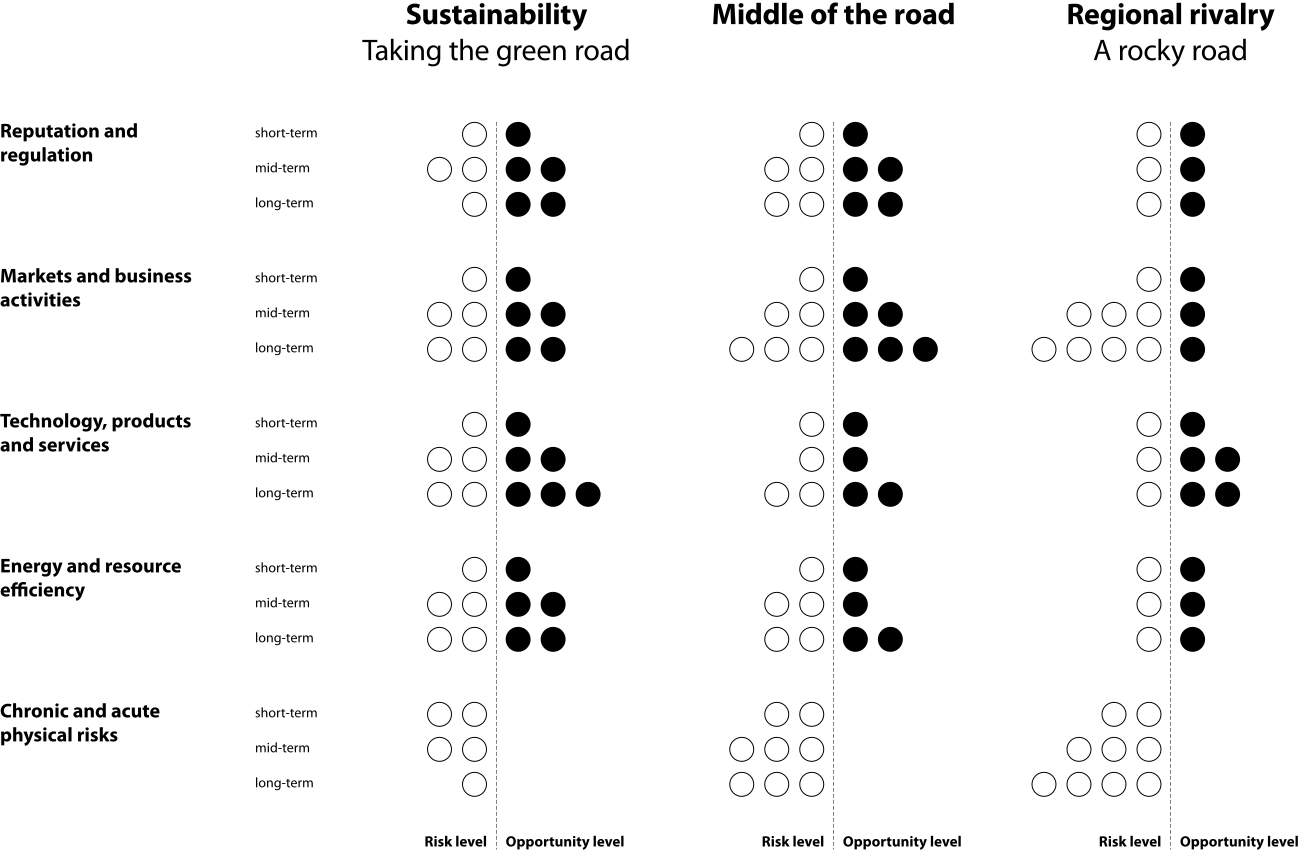
The selected scenarios were assessed across short-, medium- and long-term timeframes. As part of the scenario analysis, transition risks and opportunities were aggregated into meaningful categories. Each category was then evaluated regarding its potential impact and probability. The products of these specific ratings are shown in the chart below, providing the respective risk and opportunity level on a range from low (1 circle) to very high (4 circles).
Strategic points
The scenario analysis underscored several strategic points.
Physical risks
Acute and chronic physical risks do not bear the potential for direct opportunities but are indirectly related to transition opportunities, e.g. regarding their implications on water resource efficiency. Physical risks are expected to increase across all scenarios. In the "Regional rivalry" scenario, however, these risks become nearly unmanageable in the long term, putting large parts of the value chain at risk. This scenario demands significant financial expenditures (e.g. insurance). The other scenarios show more manageable physical risks and pose less of a financial burden, peaking in the mid-term at a lower magnitude in the "Sustainability" scenario and stabilizing in the "Middle of the road" scenario.
Transition risks and opportunities
Across the four aggregated transition categories, risks and opportunity trade-offs vary by scenario:
Regional rivalry scenario
Risks are generally low but so are opportunities – except for "Technology, products and services" related to fossil fuels, which can advance with few restrictions. However, "Markets and business activity" shows the highest risks over time due to expected supply chain disruptions and market segregation. A strategy could be developed by Datwyler to leverage minor opportunities, but the overarching challenges remain predominant.Middle of the road scenario
This scenario presents medium to high risk and opportunity levels, often balancing each other. This reflects significant uncertainty as it lacks a clear trend toward either sustainability or regional rivalry. In this scenario, a less defined strategic approach is required for Datwyler, as the significant uncertainty forces reactive measures to adapt to changing circumstances. Decision-making tends to focus on relatively short-term actions.Sustainability scenario
Opportunities outweigh risks here, with global cooperation and sustainability providing Datwyler the chance to differentiate itself as a market leader. In this sustainable setting, Datwyler's transition plan, which includes large fractions of renewable energy, dual-sourcing supply chains and new materials and technology, is expected to be beneficial.
2.6 Resilience
Datwyler has developed a comprehensive approach to managing climate-related risks and leveraging opportunities to enhance resilience. Climate risks are embedded into Datwyler's business continuity and risk management process, enclosing climate adaptation and mitigation into its business strategy. This includes emergency plans regarding natural hazards. Further, Datwlyer has set ambitious climate-related goals and committed to Science-Based Targets.
Since 2023, we have expanded our assessment of climate-related risks and opportunities (CRROs), refining methods to include site-specific evaluation. We conduct climate scenario analyses to evaluate CRROs across various climate projections in order to ensure our future resilience. According to the results of these analyses, we consider ourselves to be equipped for various future developments, seeing most opportunities in the sustainability scenario.
To mitigate climate risks and capture growth opportunities, Datwyler is diversifying its supply chain, increasing renewable energy use and investing in sustainable products. Strong global collaboration and alignment with regulatory standards help the company to maintain operational stability and competitiveness. By regularly assessing different risk and opportunity categories, Datwyler adapts its business strategy to maximize opportunities and minimize risks, ensuring the continued resilience of its business model.
3 Risk management
3.1 Risk identification process
Climate-related risks are integrated into the overall business continuity and risk management process. Risks are continuously re-evaluated and communicated between different levels of the company. Scenario analyses are conducted to explore opportunities and address the growing scope of risks. The management of each business area is responsible for identifying significant risks, and informing the Executive Committee and the Board of Directors about potential developments.
3.2 Risk management
Once risks are identified and assessed, management develops and implements measures to reduce the likelihood of occurrence and mitigate potential impacts. These measures are regularly monitored and reviewed as part of the continuous risk management process. Datwyler employs business continuity planning (BCP) to assess and mitigate climate-related risks, with the goal of preventing disruptions to critical operations and ensuring quick recovery. The BCP process includes key ESG risks, such as climate change, and accounts for events like natural disasters and fires. The risk management system at Datwyler production sites is based on ISO 31000 standards, incorporating regular audits to ensure compliance and readiness.
3.3 Risk integration
Climate-related risks are embedded into Datwyler's institutionalized risk management system. Sustainability risks, including those related to climate change and the supply chain, are classified based on their impact at the Group, business unit and production site levels. The CFO and the Head of Internal Audit oversee the risk management process through active exchanges and meetings with business areas. Risks are consolidated, reviewed and reported annually to the Board of Directors, ensuring uniform evaluation across the Group. The Board holds the ultimate responsibility for assessing risks, with coordination led by the Head of Internal Audit.
4 Metrics and goals
Datwyler assesses progress and discloses comprehensive key metrics and targets on sustainability and GHG emissions as part of the sustainability reporting. All climate-related metrics and targets can be found in the chapter "Environmental" in the Sustainability Report. Progress regarding our transition plan is measured based on several of these indicators.
The corresponding climate transition plan is available in the chapter "Climate-neutral operations 2030". Highlighting the fraction of renewable energy as one of Datwyler's core metrics, we are well on track to achieving the set targets, e.g. electricity from renewable sources increased from 38% in 2023 to 64% in 2024.
Datwyler engages regularly with shareholders and investors, integrating their feedback on the ESG strategy and the climate transition plan. By aligning our operations with sustainability goals and focusing on GHG reductions, Datwyler aims to strengthen its market position and significantly lower its environmental footprint.