























2.1 Introduction and reporting scope
The Sustainability Report is part of Datwyler’s Annual Report and provides a comprehensive view of our sustainability commitments and progress. Datwyler has consistently reported its environmental, social and governance (ESG) performance based on leading frameworks and reports in accordance with the GRI standards and the recommendations of the Task Force on Climate-related Financial Disclosures (TCFD) as external reporting frameworks as well as Articles 964a-c of the Swiss Code of Obligations (CO). A separate reference table maps our material topics to statutory non-financial matters according to Art. 964b CO.
Datwyler has committed to reducing its greenhouse gas emissions in alignment with the Science Based Targets initiative (SBTi). The SBTi validation confirms that our scope 1 and 2 reduction target is aligned with a 1.5°C pathway, while our scope 3 target meets SBTi criteria for ambitious value-chain decarbonization.
Datwyler continues to commit to the ten principles of the UN Global Compact since joining in 2009. Furthermore, we report our environmental impact through CDP and have earned the EcoVadis Platinum rating for the second consecutive year, which ranks us among the top 1% of the more than 150'000 assessed companies across 185 countries.
In 2025, Datwyler received limited assurance from KPMG on selected non-financial KPIs. Verified indicators include:
Greenhouse gas (CO2eq) emissions (scope 1 and 2) and greenhouse gas emissions intensity (GRI 305-1, GRI 305-2, GRI 305-4 and GRI 305-5)
Accident severity rate
Rubber waste generated (GRI 306-3)
Percentage of suppliers that are certified according to sustainable certificates
Number of confirmed corruption incidents (GRI 205-3)
The verified KPIs are marked with "Assured by KPMG".
Business model
Datwyler produces high-quality, system-critical elastomer components for global markets such as Healthcare, Automotive, Industries, and Food & Beverage. Key materials used are elastomers, plastics, aluminum, metals, and operating supplies. With 25 sites across four continents, Datwyler has a global production footprint with in-house elastomer mixing, mold shops, and sales and R&D centers near customers.
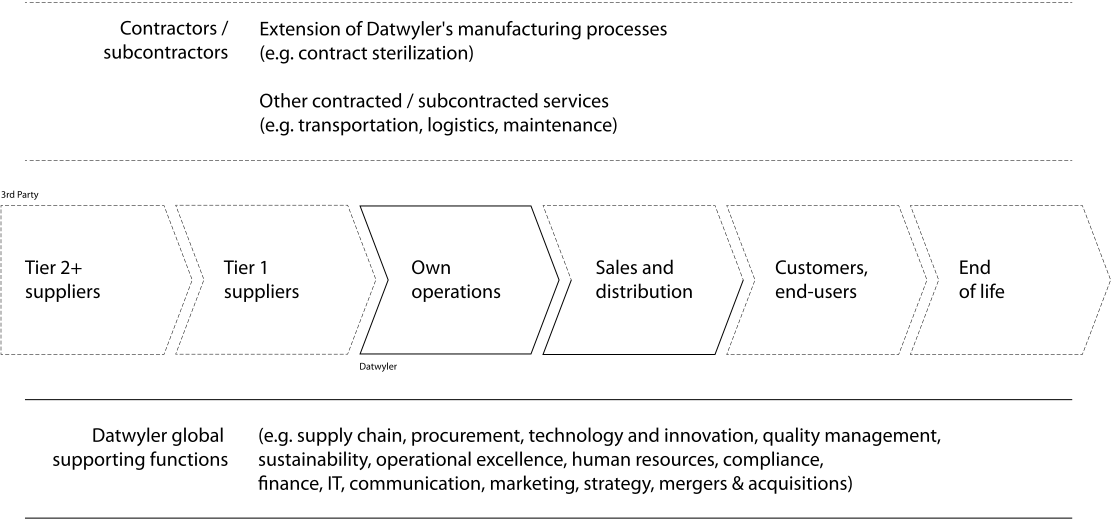
Datwyler’s value chain encompasses product engineering, production process design, manufacturing of product-related equipment such as molds, compound mixing, and internal manufacturing processes including calendering, molding, trimming, and packaging. Components are delivered to over 1'000 customers in more than 100 countries, where they are integrated into final systems or products. Our net revenue, totaling CHF 1'100.5 million, is mainly generated in Europe (CHF 580.3 million), North and South America (CHF 291.1 million), and Asia (CHF 223.6 million), while remaining regions are summarized as “other markets” (CHF 5.5 million).
Our business model is built on an integrated value chain that reflects how we systematically create value for our customers and stakeholders across all stages of our operations.
-
Suppliers of monomers, base chemicals
Suppliers of silicon (silicon sand mining)
Suppliers of aluminum ore (bauxite mining)
Suppliers of other ores and minerals (e.g. talc or kaolin) / Suppliers of latex rubber
Suppliers of processed raw materials used by tier 1
-
Suppliers of raw materials and semi-finished parts (rubber, silicon, aluminum, inserts, etc.)
Suppliers of trading or finished goods
Suppliers of packaging materials
Suppliers of indirect materials (e.g. solvents, mold release agents, dry trimming solutions, maintenance/spare parts, internal consumption)
Suppliers of machinery, fixed assets, molds, and mold components
Utility providers
-
Product engineering
Production process design
Tooling
Compound development and mixing
Internal manufacturing (e.g. calendering, molding, trimming)
Packaging
Waste/scrap and water treatment in own operations
-
Sales activities to promote and sell Datwyler products
Distributors of Datwyler products
-
Assembly of components into final systems (direct customers)
Integration into final products by OEMs
Use of the final product (end-user/consumer)
-
Disposal, reuse, recycling of Datwyler components
Disposal, reuse, recycling of final products containing Datwyler components
2.2 Integration of sustainability at Datwyler
At Datwyler, sustainability means operating successfully today while creating value for all stakeholders in the long term. We aim to proactively shape a sustainable future by balancing economic, environmental, and social considerations in every decision. Our performance is tracked through recognized sustainability ratings, providing a holistic view across key sustainability aspects. Our goal is to rank in the top 25% of our industry in all relevant ratings by 2030.
By integrating material ESG topics into its strategy, governance and risk management, Datwyler ensures a proactive and embedded approach to sustainability.
ESG Governance
Oversight and execution of the sustainability (ESG) strategy
To embed ESG principles across all levels of our organization, we have established clear roles and responsibilities to ensure alignment, accountability and participation in our sustainability goals.
Each employee’s active involvement ensures that our ESG efforts are consistently reflected in both strategic decisions and everyday actions.
Board of Directors (BoD)
Oversees the overall ESG strategy and reporting, setting goals and ensuring accountability throughout the organization.
The Board oversees the Executive Committee on defined matters (e.g., development and adoption of ESG strategy, related policies and goals, management of ESG-related risks, communication of critical concerns, approval and supervision of employee incentives).Executive Committee
Executes the ESG strategy and ensures alignment with corporate objectives, reporting to the Board.
The coordination of sustainability activities is overseen by the Chief Financial Officer (CFO), with dedicated support from the sustainability team. Ongoing engagement with the Executive Committee, Board of Directors, and key organizational functions ensures strategic alignment and integration on sustainability priorities.Group functions (e.g., Risk, Compliance, HR)
Integrate ESG considerations into their respective areas, managing risks, setting policies, and supporting compliance with ESG standards.Business units
Implement ESG initiatives at the operational level, aligning daily activities with Datwyler’s ESG objectives and targets.Employees
Uphold ESG policies and practices in their roles, contributing to the company’s culture of ethical behavior, sustainability and social responsibility.
Business integration
Everyday sustainability topics are managed by the sustainability team, business areas, business units, sites and other global functions such as human resources, procurement, technology and innovation, communications, engineering and compliance.
All Datwyler employees contribute to our sustainability journey.
Collective knowledge of the Board of Directors
Annual knowledge exchange sessions are organized for the BoD members with the goal of advancing the collective knowledge, skills and experience in sustainable development.
In 2025, the following topics were presented to the BoD:
Update about the implications of EU Omnibus and SBTi Target Setting Proposal (Audit Committee meeting May 2025)
Review of the sustainability strategy including trends, strategic challenges, long-term ambition and top priorities (strategy meeting September 2025)
Review and approval of near-term emission reduction targets for SBTi (Audit Committee and BoD meeting September 2025)
Update about regulatory developments, ratings, SBTi validation and Sustainability Report (Audit Committee meeting December 2025)
Approval of the 2025 Sustainability Report including Climate Report in line with Swiss Code of Obligations (Audit Committee and BoD meeting February 2026)
Evaluation of the performance of the Board of Directors
Each year, the Chair of the BoD initiates an independent evaluation of Board members’ competencies through a questionnaire covering leadership, culture, role clarity, teamwork, accountability, decision- making, communication and Board operations - including economic, environmental, social and governance topics.
BoD members complete the questionnaire individually, and the Chair reviews the responses. Where gaps are identified in skills or operational effectiveness, targeted actions are taken to address them.
Communication
of critical concerns
Critical concerns refer to actual or potential negative impacts on stakeholders, raised through grievance mechanisms or other channels. These may relate to Datwyler’s conduct in its operations or business relationships.
At Datwyler, the CEO or CFO immediately reports critical concerns to the BoD. They are documented in the Compliance Report and the Annual Risk Management Report and formally disclosed to the BoD by the CFO.
2.3 ESG (environment, social, governance) strategy
To realize our sustainability vision of operating successfully today while creating value for all stakeholders in the long-term, we have established a comprehensive ESG strategy. This strategy prioritizes sustainability topics through a structured materiality process and translates material topics into measurable targets that guide our actions.
Materiality
Datwyler conducted its first materiality assessment in 2016. Since then, we have regularly reviewed and updated our material topics to align with our sustainability strategy, considering impacts on the economy, society and the environment, as well as related risks and opportunities for our business success.
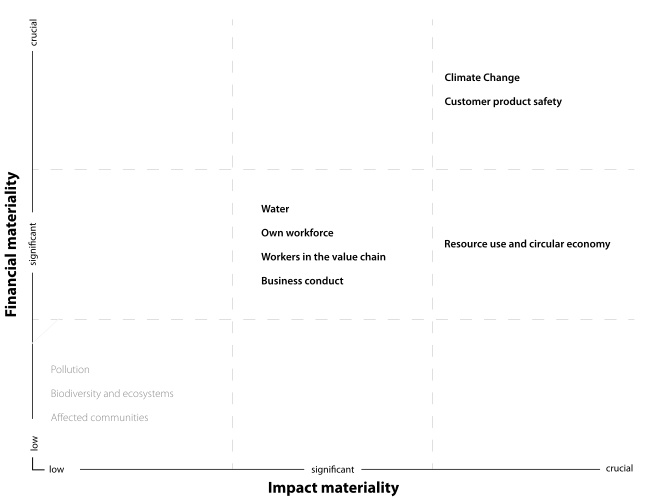
Building on this ongoing process, Datwyler carried out a comprehensive double materiality assessment (DMA) at the end of 2024, following the framework provided by the European Sustainability Reporting Standards (ESRS), to support compliance with the EU Corporate Sustainability Reporting Directive (CSRD). Even though CSRD has been postponed due to EU Omnibus, Datwyler decided to structure this year’s report according to the material topics defined in the DMA. In the 2024 sustainability report, we outlined twelve focus topics. These are now superseded by our newly defined seven material topics, reflecting a reorganization of topics while maintaining the content.
The DMA was conducted based on the materiality assessment process outlined in the “EFRAG IG 1: Materiality assessment implementation guidance”. The double materiality assessment considered both the impacts of our business on society and the environment (impact materiality) and how sustainability topics affect Datwyler in the form of risks and opportunities (financial materiality). The DMA consisted of five key steps:
Define the purpose and scope of the DMA: The assessment was conducted at group level, included all subsidiaries and covered the entire value chain.
Identify potential material ESG topics: A longlist of potential topics across Datwyler’s own operations and its upstream and downstream value chain was identified. Affected stakeholder groups were represented by internal stakeholders, which helped reflect their interest when validating the relevance of sustainability matters.
Categorize ESG topics: The ESG longlist was clustered into logically coherent categories, and peer benchmarking ensured that sector-specific topics were included.
Identify and assess IROs (impacts, risks and opportunities): The impact materiality was assessed by multiplying the severity of impact (scale x scope x ability to mitigate) with the likelihood of occurrence. The financial materiality was assessed by multiplying the magnitude of financial effects with the likelihood of occurrence.
Prioritize and validate: The DMA was approved by the Executive Committee and the Board of Directors.
The results are consolidated by ESRS topic. As illustrated in the matrix, seven out of the ten ESRS topics have been identified as material to Datwyler.
A separate reference table provides the allocation of Datwyler’s material topics on non-financial matters according to the Swiss Code of Obligations.
Material topics
ESG goals 2030
To further strengthen its sustainability management and to make the material topics more tangible, Datwyler has defined its top ten sustainability goals for 2030 (2035 in the case of validated SBTi targets).
Meet SBTi-validated near-term reduction targets by 2035 (reduce absolute greenhouse gas (GHG) emissions by 63% for scope 1 and 2 and by 37.5% for scope 3)
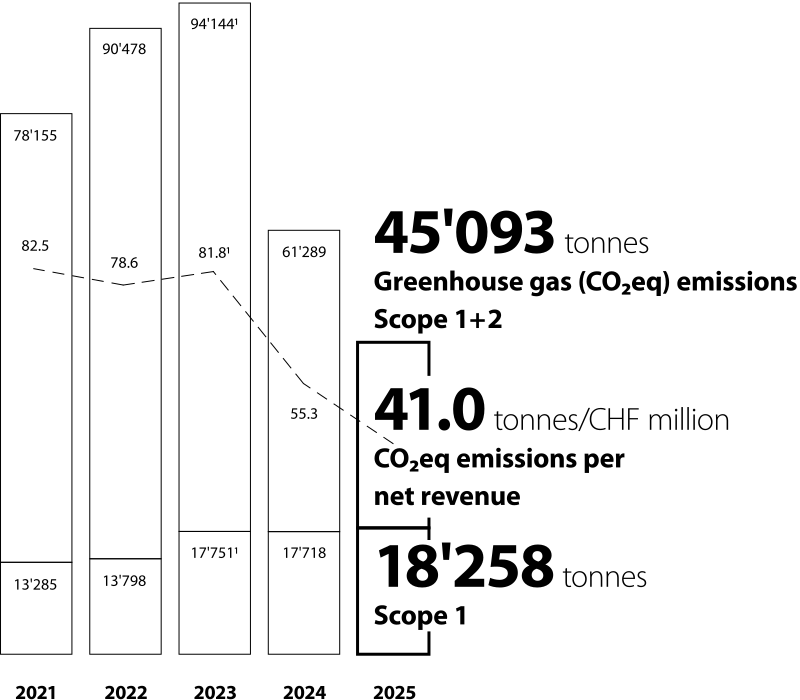
KPI: Difference in absolute scope 1, 2 and 3 emissions in tonnes CO2 equivalent (eq) compared to base year 2023 (for scope 1 and 2) and base year 2024 (for scope 3)Compared to 2023, the absolute scope 1 and 2 CO2eq emissions were reduced by 52% in 2025, leading to total emissions of 45'093 tonnes. Scope 3 emissions for the year 2025 have not yet been assessed.
Product carbon footprint available for each new product
KPI: Percentage of new products covered by a product carbon footprint (PCF) analysisOur PCF calculations are still mostly focused on existing products upon customer request, either as specific studies for a particular part or as general calculations for a product category, with over a hundred parts calculated in 2025. The coverage for new products remains below 1%, since PCF analyses are not yet part of the product development process, but progress is targeted for 2026.
ISO 14001, ISO 45001 and ISO 50001 certificates at all production sites
KPI: Percentual coverage of ISO 14001, ISO 45001 and ISO 50001 at all production sitesAt the end of 2025, 76% of the production sites were certified according to ISO 14001, 52% according to ISO 45001, and 8% according to ISO 50001.
 Climate changeResource use and circular economyOwn workforce
Strive for all quality-critical suppliers to sign Supplier Code of Conduct
KPI: Percentage of quality-critical suppliers that have signed the Supplier Code of ConductAt the end of 2025, 98% of the quality-critical suppliers had signed the Supplier Code of Conduct.
Employee commitment rates above industry benchmark for all sites
KPI: Employee commitment rate assessed via employee surveyThe employee commitment rate in 2025 was 84 out of 100, exceeding the industry benchmark of 82.
Strive for zero accidents, zero injuries and a healthy working environment
KPI: Accident severity rate (absences due to work-related accidents in days / total hours worked *1'000)In 2025, there were 1'584 days of absence due to work-related accidents, corresponding to an accident severity rate of 0.11.
Implementation of a strengthened, group‑wide quality management system (QMS) framework
KPI: Adoption percentage of the strengthened QMS framework at our sitesWe began implementing the strengthened QMS framework in 2025. The QMS implementation is advancing, with Phase 1 completed in 12% of our sites and broader roll-out ongoing.
Embed human rights due diligence and considerations in all applicable key processes, contracts and relationships along the value chain
KPI: Number of key processes and group-wide guidance documents where human rights topics are embeddedIn 2025, human rights topics were further embedded in our human resources and procurement processes. Supplier selection and employee onboarding and survey were this year’s focus, with work in recruiting and communication still ongoing.
At least one annual external community activity per location
KPI: Percentage of locations that engage in at least one external community activityIn 2025, 64% of all locations engaged in at least one external community activity.
Be among the top 25% within our industry in all relevant sustainability ratings
KPI: Percentage of relevant ratings where we are among the top 25% within our industryIn 2025, Datwyler achieved this for the following ratings: EcoVadis (top 1% of all rated companies) and Sustainalytics (top 11% within our industry).
Contribution to the SDGs
As part of its sustainability strategy, Datwyler aims to make a global contribution to sustainable development in line with the Sustainable Development Goals of the United Nations (SDGs). Of the 17 global goals, Datwyler has prioritized seven SDGs to which its business model makes a particular contribution. The material topics include the icons and references to the relevant SDGs.
Furthermore, in an initiative to evaluate the sustainable impact of our technology- and product-related innovations, our Intellectual Property Department continuously tracks the contribution of the Datwyler patent portfolio towards these SDGs.
Stakeholder engagement
Ongoing regular dialogue with our stakeholders ensures that we comprehensively understand their diverse expectations and concerns while building trust in strong, reliable relationships with all partners over time. This dialogue is vital to ensuring transparency in our ESG strategy and performance. Datwyler employs various methods to engage with different stakeholder groups.
-
Employee satisfaction survey
Occupational health and safety representatives
Work councils
Annual appraisals
Trade unions
Townhalls
Whistleblowing hotline / channel
-
Customer questionnaires
Customer audits
Dialogue with customers
Trade shows / technical days / webinars / conferences
Regular performance reviews with our customers
Whistleblowing hotline / channel
-
Supplier assessment / questionnaires
Dialogue with suppliers
Supply agreements
Supplier audits
Supplier Code of Conduct
Whistleblowing hotline / channel
-
Volunteering activities
Whistleblowing hotline / channel
-
ESG ratings
Continuous introduction calls for investors
Participation in investor conferences
Investor conferences on full-year and half-year results
Capital market days
Annual general meeting
-
Workshops, knowledge sharing and industry conferences
Industry collaborations, e.g. Circular Rubber Platform or Alliance to Zero
2.4 Reporting on environmental topics
In the environmental area, Datwyler focuses on climate change, water, resource use and circular economy.

Material topic
Climate change
Our environmental impact in the form of greenhouse gas emissions occurs mainly in the upstream value chain, from raw material production, our own operations, transportation and final disposal, with energy being a major contributor. We are aware of the environmental footprint of our activities and those for which we are indirectly responsible, and we seek to avoid, minimize, and mitigate the negative impacts on climate change. To further reduce our impact, our product lines (e.g. battery seals) facilitate the development of the renewable energy industry and help our mobility customers to enable the transition to greener mobility.
Regarding climate change, Datwyler is exposed to both physical and transition risks. Natural disasters caused by global warming and a high dependency on fossil sources could affect our supply chain. In addition, we monitor the evolution of more stringent environmental regulations, such as carbon taxes, which may increase raw materials and energy costs, or potentially restrict certain chemicals (e.g. fluoropolymers). At the same time, the growing demand for sustainable solutions can be beneficial for some of our product lines and open new market segments. For more information on climate-related risks and opportunities, see our Climate Report.

Key targets
Reduce absolute scope 1 + 2 GHG emissions 63% by 2035 from a 2023 base year
Reduce absolute scope 3 GHG emissions from purchased goods and services 37.5% by 2035 from a 2024 base year
ISO 14001 and ISO 50001 certificates at all production sites by 2030
Our sourcing strategy encourages suppliers to bring in more sustainable solutions, with an additional focus on a local-for-local approach

Our approach
Datwyler is committed to contributing to the Paris Climate Agreement and reducing its emissions. To guide this journey, Datwyler decided to commit to the Science Based Targets initiative (SBTi) in 2024 and set science-based emission reduction targets for the near term. An important milestone was achieved in the reporting year – Datwyler submitted its scope 1, 2 and 3 emission reduction targets to SBTi, and they were successfully validated in December 2025. To align with the SBTi terminology, Datwyler has updated its emission reduction targets, emphasizing our absolute reduction targets rather than the previously stated “climate-neutral operations 2030” target.
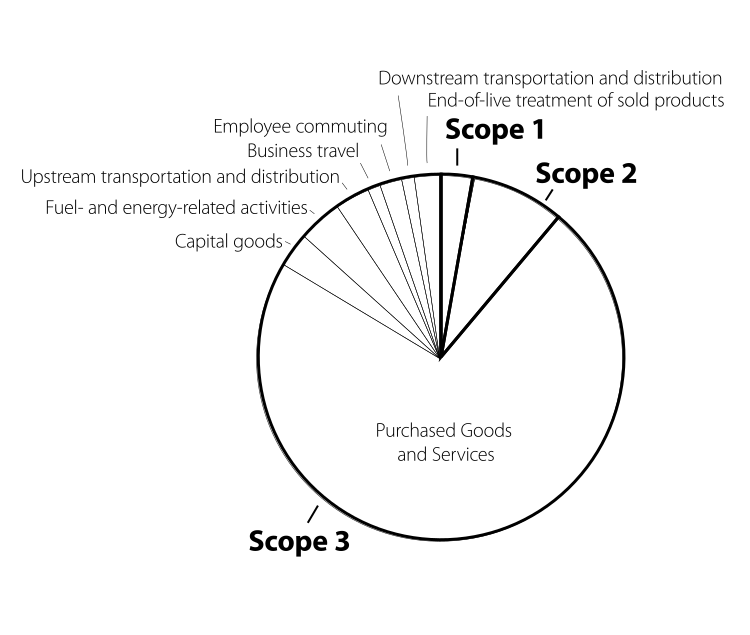
Our emissions profile for 2024 shows that scope 1 accounts for around 3.5%, scope 2 for 8.5%, and scope 3 for 88% of our total footprint. Our scope 1 emissions are primarily driven by fossil fuels used for stationary and mobile combustion. A smaller share results from fugitive emissions and process-related emissions generated through oxidation in our catalytic oxidizer systems (CatOx). The emissions allocated to scope 2 are due to electricity consumption and district heating.
For scope 3, all 15 categories were screened, but Datwyler concluded that not all of them are relevant. The largest category – purchased goods and services – represents approximately 81% of scope 3 emissions. Other major contributors include upstream and downstream transportation (5%), fuel- and energy-related activities (4%), and capital goods (3%). Depending on the category, emissions were quantified using spend-based, supplier-specific, or average-data methodologies. In category 1, around 30% of emissions were calculated using primary data from suppliers where available, and we aim to increase this share going forward through our supplier engagement program.
Managing these emissions means reducing our energy use and focusing on energy efficiency in our own operations, while addressing the lion’s share of our emissions requires active engagement with partners and suppliers.
Improving energy efficiency within our operations
We are committed to reducing our scope 1 + 2 emissions 63% by 2035, taking 2023 as the base year. To achieve this, we are following an integrated approach to increase energy efficiency. One central element of our approach is the integrated environmental management system (EMS), which defines the energy management at the production sites. Our goal is to certify all production sites to ISO 14001 and ISO 50001. By the end of 2025, 19 sites (76%) had been certified to ISO 14001 and two sites (8%) to 50001. Due to the closure of one site in 2025, the number of sites certified according to ISO 14001 has decreased by one compared to the prior year.
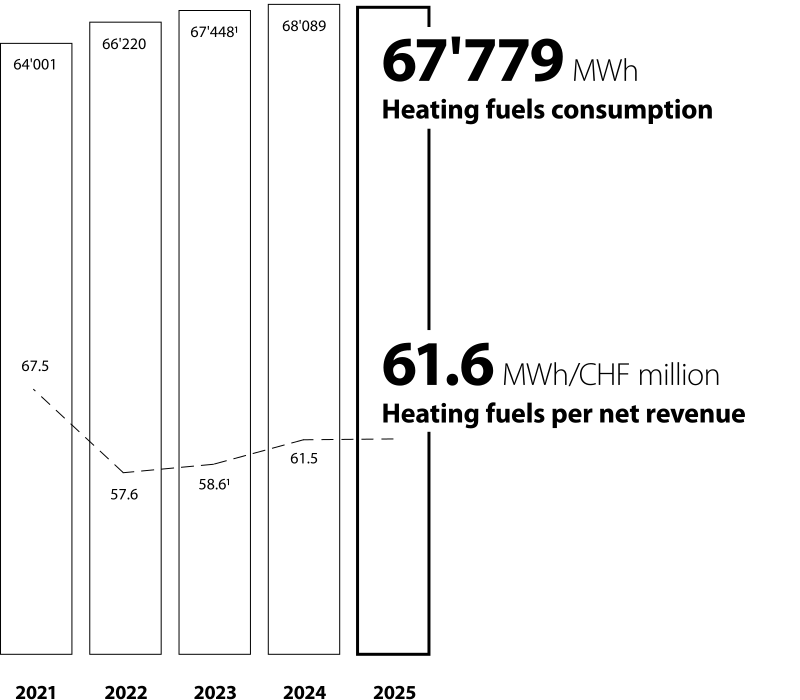
Furthermore, our emission reduction plan focuses on increasing energy efficiency, purchasing renewable energy, investing in our own generation of renewable energy, and transitioning to lower-GHG fleet options and refrigerants. We prioritize energy efficiency as the most impactful and cost-effective component of our strategy, as it reduces overall demand and delivers immediate environmental and financial benefits. The remaining emissions can then be addressed by increasing the share of renewable energy within our operations.
Supplier engagement
Given its significance and the substantial reduction potential it offers, we have chosen to focus our efforts in reducing scope 3 emissions on the largest category. We have committed to reducing our scope 3 emissions from purchased goods and services 37.5% by 2035, taking 2024 as the base year.
Key levers to reduce scope 3 emissions include expanding the use of recycled or bio-based raw materials, reprocessing leftover materials, optimizing production processes to reduce waste, integrating eco-design principles in product development (see chapter “Resource use and circular economy”) and supplier engagement. For the submission of our targets, a pre-assessment of potential measures and their expected impact was conducted, and a detailed reduction roadmap will be developed.
Supplier engagement to reduce scope 3 emissions is guided by our Supplier Code of Conduct, sustainable procurement guidelines and a planned supplier engagement program, which establish the foundation for environmentally responsible supply chains and ensure collaborative commitments to lower environmental impacts.
Besides these efforts, Datwyler continues to drive forward the further development of the sustainability level of its suppliers by:
Integrating ESG into the supplier management processes, such as supplier development, supplier selection and monitoring practices, and supplier audits. This includes a Supplier Sustainability Assessment program and a review of the status of suppliers that are certified according to sustainability certificates (ISO 14001 & ISO 50001) (see chapter “Workers in the value chain”)
Engaging with suppliers to jointly explore more sustainable product options and share ideas, emphasizing the importance of lowering the environmental footprint of supplied materials
Facilitating sustainable solutions
Proposals for more sustainable materials, whether to replace existing products or support new developments, are gathered through the Procurement team and evaluated by the Material Development department for feasibility (see chapter “Sustainability as criteria for material selection”). Whenever appropriate, materials with a lower environmental footprint are selected.
In addition, Datwyler aims to increase its share of locally sourced materials in the long term, starting with packaging materials, and extending to raw materials and indirect materials, where the validating phase requires continued efforts, since the specifications are more demanding than with packaging materials.
Complementing these initiatives, Datwyler also prioritizes delivering its raw materials in large volumes by dry-bulk tankers or returnable packaging, which cuts down on packaging materials significantly.
Driving sustainability through collaboration
It is Datwyler’s explicit goal to encourage sustainability-related collaborations with customers to maximize impact. Increasingly, customers are engaging Datwyler on environmental and social topics, with rising expectations for transparency on metrics like product carbon footprints.
The urgent need for emission reductions requires partnerships along the entire value chain. As a founding member of the Alliance to Zero, Datwyler actively contributes to this non-profit membership association, which represents the pharmaceutical supply chain. The Alliance aims to facilitate the pharma sector’s transition to net-zero emissions, aligning with the goals of the Paris Climate Agreement.

Progress in the reporting year
Reduction of scope 1 and 2 greenhouse gas emissions
In 2025, our operations were responsible for emissions of about 45'0931 tonnes CO2eq (scope 1 and 2), representing a 52.1% reduction compared to our base year 2023. The progress confirms that we are well on track to achieve our emission-reduction target.
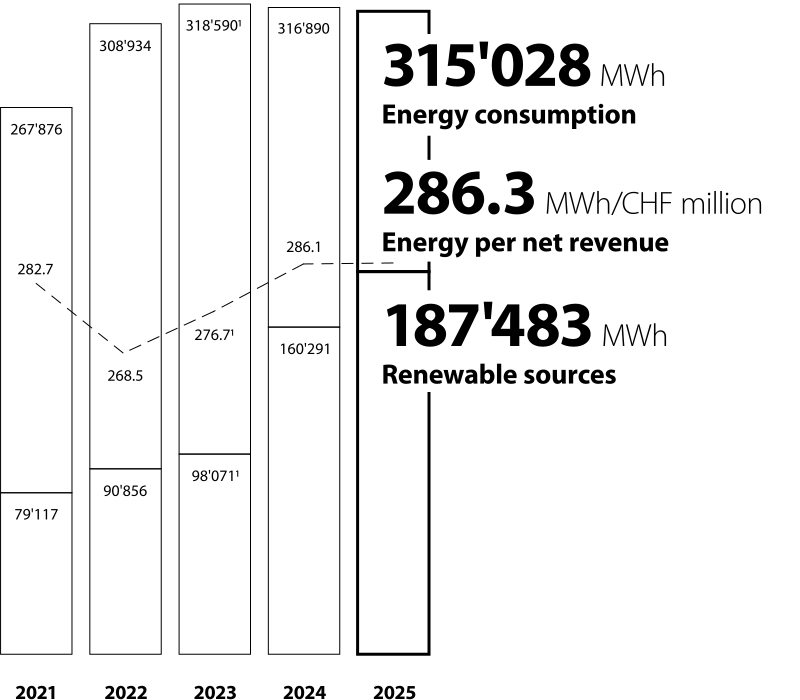
Datwyler reduced relative energy consumption (based on currency-adjusted net revenue for 2025) by 3.5% through targeted energy-efficiency measures. These included employee awareness campaigns, lighting upgrades, implementation of heat-recovery systems, improved insulation, and the replacement of outdated equipment with more energy-efficient technologies.
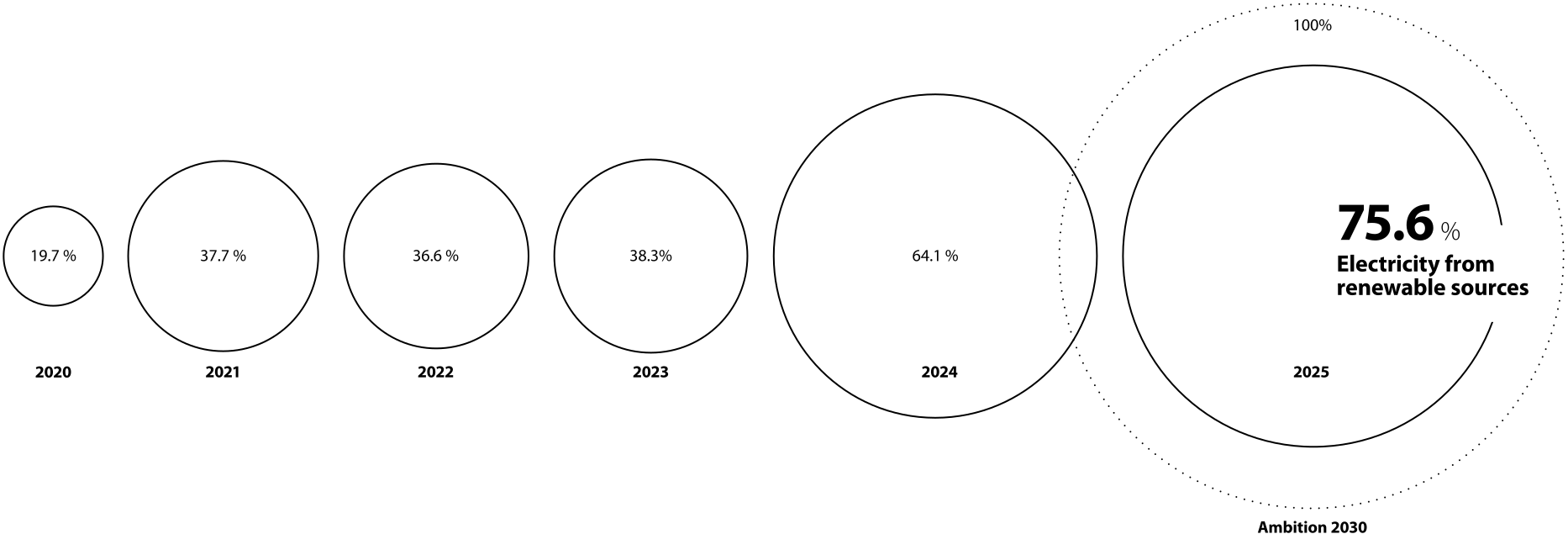
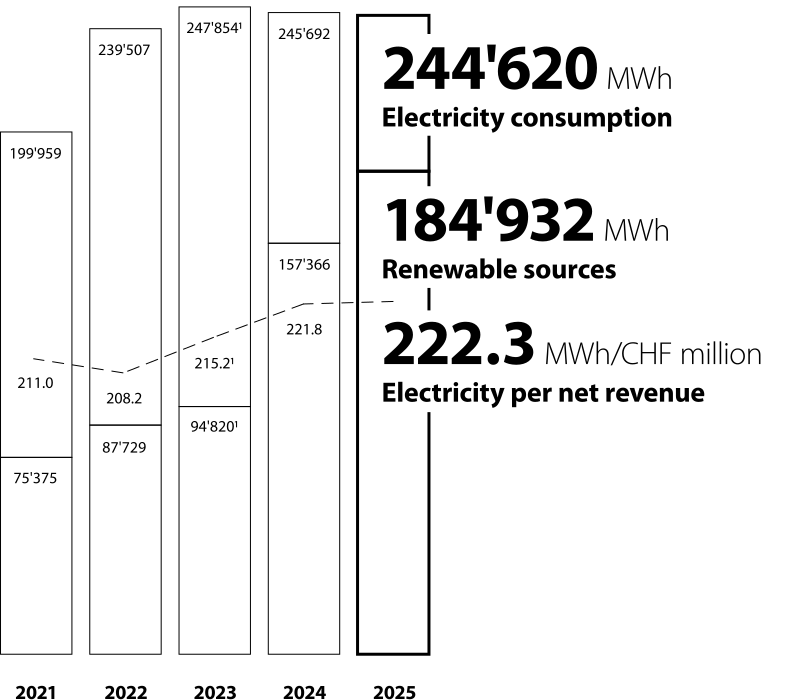
At the same time, we intensified our focus on renewable electricity. Purchasing renewable energy and the self-generation of electricity are key strategies in achieving our sustainability targets. Nineteen sites now get the majority – or in most cases all – of their electricity from renewable sources. Furthermore, our commitment to self-generation continues to grow. In 2025, we further expanded our capacity, generating a total of 6'789 MWh. 99% of this generated electricity is consumed directly at our sites. All these efforts contributed to an increase in the share of renewable electricity used across our operations, from 64.1% in 2024 to 75.6% in 2025.
_____
Further investments in PV systems and the extensions of contracts to procure renewable electricity increased the share of electricity from renewable sources from 64.1% to 75.6%.
Improving scope 3 data quality
Datwyler’s total scope 3 emissions for the year 2024 amounted to 455'310 tonnes CO2eq. During the reporting year, our priority was to strengthen and refine our scope 3 accounting methodology in order to accurately define our base-year emissions and to complete the successful validation of our targets by SBTi. Due to refinements in the accounting methodology and their implications for data collection, scope 3 emissions for 2025 have not yet been calculated, and a year-on-year comparison with the base year is not yet feasible. Nevertheless, we continued to implement initiatives aimed at reducing scope 3 emissions, as described in the chapter “Resource use and circular economy.”

Material topic
Water
Our environmental impact encompasses water withdrawal across the entire value chain. Water is essential for various industrial processes, including cooling and washing. As a result, stricter regulation on water withdrawals could lead to increased operational costs. In addition, Datwyler is exposed to physical risks such as water scarcity which could disrupt production processes in our supply chain. To mitigate these risks and reduce our overall impact, we continue to focus on improving water efficiency and increasing the reuse of treated process water.
Key targets
Reduce water withdrawal relative to net revenue by 3% per year
ISO 14001 certificate at all production sites by 2030
Our approach
At Datwyler, our priority is to reduce water withdrawal across our operations by implementing targeted projects aimed at improving overall water efficiency.
Water withdrawal
Most of Datwyler’s total water withdrawal is attributable to the specific requirements of its production processes. Both the cooling systems used in the Food & Beverage business unit’s production and the washing of components in the Healthcare sector require significant amounts of water. Specifically, approximately 33% of Group-wide water withdrawal occurs due to the groundwater cooling system used in Switzerland. Since this is a closed-loop system at our production site, the authority-approved groundwater withdrawal in Switzerland is reported separately, as indicated in the data table.
Most of the water we withdraw is used for cooling or washing processes and is subsequently discharged, resulting in relatively low water consumption. At present, we do not yet systematically track water discharge and consumption across all production sites but are evaluating options to monitor and track this data in the future.
Water availability
Negative impacts on water availability occur during water withdrawal, particularly in water-stressed areas. To evaluate our water-related impacts, risks and opportunities, we conducted an assessment of our production sites to determine whether they are in a region of water stress or water risk using tools such as the WWF Risk Filter Suite and WRI Aqueduct. Countries and regions identified as highest priority include India, China, Mexico, the west coast of the United States, and Belgium. Water-related topics such as water stress and flooding risk are also addressed in our climate scenario analysis. Further details can be found in our Climate Report.
Progress in the reporting year
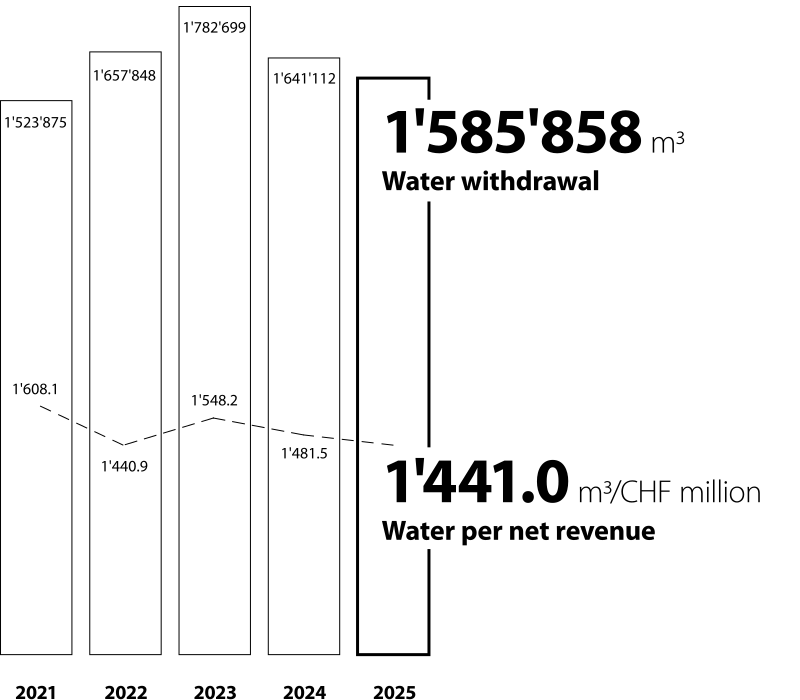
The long-term target (2015 to 2025) is to reduce relative water withdrawal per net revenue by 3% each year. In 2025, water withdrawal was reduced by 3.4% in absolute terms and by 2.7% relative to net revenue compared to the previous year. Measures contributing to this progress include the use of rainwater for toilets and gardening, the installation of energy-efficient cooling modules, the minimization of incorrect washing-cycle events, and the installation of purification filters. The most significant project was implemented at the Alken site in Belgium, where a new wastewater treatment plant was commissioned at the end of 2025. This facility will collect and treat all wastewater of the site to transform it into the highest quality of process water.

material topic
Resource use and circular economy
Raw materials derived from non-renewable resources, such as aluminum, plastics, and synthetic elastomers, are essential for manufacturing our components and products. However, the extraction, processing, and end-of-life disposal of these materials can have significant environmental impacts. In addition, we face supply chain risks related to limited resource availability and rising costs driven by stricter regulations. The responsible use of resources through waste-reduction innovations and integrating eco-design into our product development is central.
Key targets
ISO 14001 certificate at all production sites by 2030
Product carbon footprint available for each new product by 2030
Reduce waste volume relative to net revenue by 3% per year
Our approach
We pursue a circular approach to resource management by integrating eco-design principles, responsible material selection, the use of reusable or recyclable packaging, and waste-reduction initiatives. Our focus is on optimizing resource use throughout the entire product life cycle while enhancing efficiency.
We are determined to continue developing sustainable solutions and will introduce more materials with improved environmental performance, which will help us and our customers in the pursuit of mitigating climate change.
Environmental Management System (EMS)
With our environmental management system, we aim to minimize the impact of our operations and products by designing and manufacturing them so that they use natural resources sustainably and reduce our carbon footprint.
Nineteen Datwyler sites – representing approximately 76% of our sites – have already achieved environmental certification in accordance with the ISO 14001 standard, while the remaining sites are laying the groundwork to obtain this certification.
Statutory information obligations as minimum standards
The selection of raw materials – and consequently the substances used across Datwyler’s material portfolio, including substances of concern – follows a strict and carefully structured process. All materials are managed in line with the highest international standards for chemical regulatory compliance, and any substance identified as hazardous or of concern is proactively ruled out from new developments.
Through its proactive chemical compliance approach, Datwyler continues to go beyond legal expectations. The company closely monitors global regulatory trends and performs analytical testing on finished products to verify compliance and, when necessary, identify suitable alternatives for Substances of Concern (SoCs). This proactive and science-based approach supports Datwyler’s long-term goal of designing materials that are both safe and sustainable.
Enhancing resource efficiency with predictive seal monitoring
Datwyler’s commitment to minimizing environmental impact is reinforced by continuous innovation aimed at optimizing resource efficiency. Through the early detection and resolution of seal issues, we prevent premature component replacements and mitigate the environmental consequences associated with the manufacturing, transportation, and disposal of parts. This predictive maintenance approach ensures more efficient resource utilization, reduces energy consumption, and contributes to lowering the overall carbon footprint of operations. By introducing advanced soft-sensing technology, Datwyler is developing a solution that allows customers to accurately predict when sealing materials will near the end of their service life, providing automated, early-stage feedback to enable proactive maintenance.
Progress in the reporting year
Integration of eco-design in development and production
In addition to a standard product development process, eco-design provides a critical perspective that goes beyond concepts focused solely on technical capabilities and cost efficiencies, enabling the reduction of environmental impact across all life-cycle stages.
Over the past two years, we have successfully conducted carbon footprint assessments for dedicated products across all business units, covering the most important manufacturing materials and processes. We also actively engage with our suppliers to obtain primary data on the sourced components, which further refines the accuracy of the assessments. These initial assessments provided us with important insights into the main sources of emissions and revealed opportunities for improvement.
The next task is to advance with this knowledge base. Product Carbon Footprint (PCF) assessments must be readily available for the project team as early as possible to ensure that the environmental aspects are accounted for during the product development stage. This automated calculation will be integrated into the Request for Quotation (RfQ) process, adding the missing “eco” dimension to the design process and enabling more balanced decision-making across different manufacturing concepts. Our goal is to have such assessments for all new products by 2030. This approach will not only help us reduce emissions but will also make our portfolio more future-proof.
Sustainability as criteria for materials selection
In designing a more sustainable product, material selection takes primary focus as it is the largest contributor to the overall product carbon footprint. Datwyler has already been able to reduce emissions in Food & Beverage by switching to recycled aluminum for the production of coffee capsules. We have also investigated alternatives to fossil-carbon components in rubber compounds and plastics, as well as options for repurposing our recycled rubber waste. In 2025, we presented our first product with bio-based plastic – the flip cap for medical vials, meeting all quality requirements, and reducing greenhouse gas emissions at the same time.
In support of the initiatives for sustainable material development, Datwyler has been a member of the Circular Rubber Platform since the end of 2024. The platform connects companies across the entire value chain and creates an environment that stimulates development, while providing an overview of existing technologies and opportunities.
Waste disposal
Datwyler has set itself the goal of reducing the volume of waste in relation to net revenue (tonnes/CHF million) by 3% annually. The company has succeeded in increasing the amount of elastomer waste used in downcycled products. For example, the company’s process-related elastomer waste is used in the production of surface coverings for sports fields. The amount of recycled and reused waste was increased from 68.3% in 2017 to 76.6% in 2025. In 2025, several sites introduced improved waste-sorting systems to support separate collection and increase recycling rates. An additional deep dive into waste streams was carried out in 2025 in order to discuss segregation of different elastomer types and identify opportunities for waste recycling by partners within the Circular Rubber Platform.
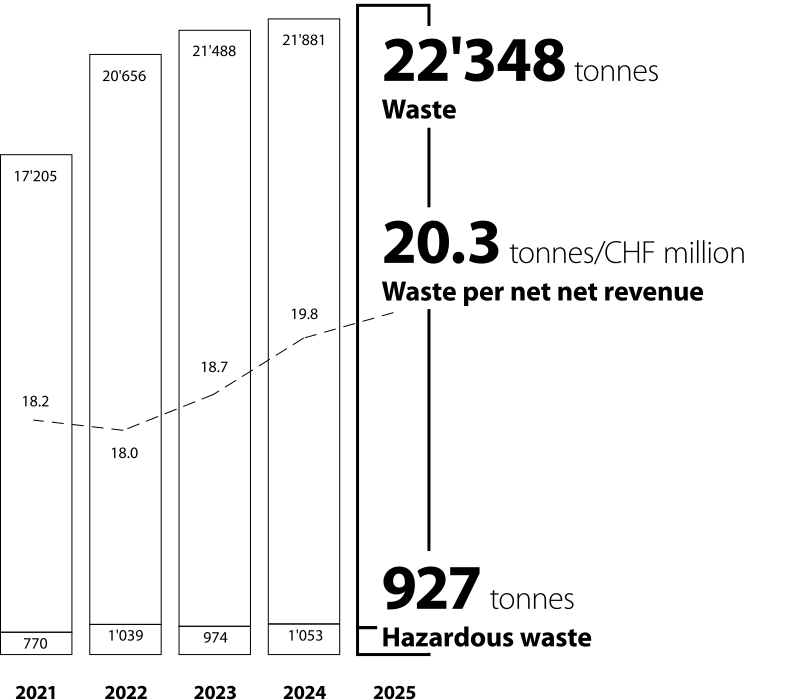
The absolute volume of waste increased by 2.1% from 21'881 tonnes in 2024 to 22'348 tonnes in 2025. With an increase in waste per net revenue of 2.8%, the target reduction was not achieved, mainly due to enhanced reporting resulting from improvements in data quality and completeness. Even so, some important initiatives were implemented, such as optimizing seal overflows to improve raw material utilization, improving molding processes, and enhancing combi-seal performance. These initiatives led to a reduction in our principal waste streams – vulcanized and non-vulcanized rubber – from 11'163 tonnes to 10'922 tonnes1. Additional steps were taken with auxiliary materials to cut the overall volume of waste produced, including working with our suppliers to reduce the amount of packaging that is received for our raw materials and separating clean plastic overwrap bags for gowning so that they can be recycled more easily from production.
_____
2.5 Reporting on social topics
In the social area, Datwyler focuses on its own workforce, workers in the value chain and customer product safety.

material topic
Own workforce
Datwyler has significant impacts on its own employees. Work factors such as secure employment, pay and health and safety can affect employees in a positive or negative way. Production workers may face additional risks since they may be in contact with hazardous substances or operate in a noisy environment. We have systematic and comprehensive internal processes in place that help mitigate health and safety-related risks to protect our employees. Further, Datwyler is exposed to employee-related risks due to its dependence on a committed and skilled workforce. Failure to meet employees’ expectations could affect talent attraction and employee retention.
Key targets
Strive for zero accidents, zero injuries and a healthy working environment
ISO 45001 certificate at all production sites by 2030
At least 30% female representation on Board level by 2026
At least 20% female representation in Executive Committee by 2031
Employee commitment rate above industry benchmark for all sites
Our approach
Datwyler strives to ensure a safe and healthy working environment for all employees, foster a culture of trust and development, and empower people to grow professionally and personally. Through strong engagement and shared values, our employees help shape Datwyler as an attractive and forward-looking employer.
To manage impacts, risks, and opportunities effectively, we take an integrated approach that prioritizes health and safety, equal treatment, and opportunities for learning and development. Our commitment to being an attractive employer and providing a safe working environment is anchored in our Code of Conduct and reinforced by our Human Rights Policy (see “Workers in the value chain”). While the Human Resources department oversees the overall framework, every supervisor and manager carries responsibility for the wellbeing and development of their teams. For health and safety, the Group is progressing toward a global EHS function designed to support governance and alignment across all sites.
Managing these aspects should result in a high level of employee commitment, which is one of our key targets. One further aspect contributing to employee commitment is fair and attractive payment, which is anchored in our Pay Philosophy Policy.
Code of Conduct
Datwyler’s commitment to safe, healthy, and fair working conditions is firmly embedded in our Code of Conduct. This Code defines responsibilities and principles for legal compliance and serves as a key instrument reflecting our respect for human rights. It provides guidance to all employees on fair employment practices, systematic training and development, and occupational health and safety.
In support of our Code of Conduct, our Environmental, Health & Safety (EHS) Policy outlines our commitment to ensuring a safe and healthy workplace through the elimination or mitigation of EHS-related risks and promoting awareness through consultation, active participation, information, and training of our employees.
We maintain a consistent global framework of HR policies covering recruitment and onboarding, fair pay, learning and development, and talent and succession management. Each site complements these standards with local policies tailored to regional regulatory and cultural requirements.
Our engagement with our workforce
The Datwyler Group fosters open communication with its employees. Regular employee surveys serve as a foundation for continuous improvement. Employees are free to join trade unions or internal employee representative bodies, and we maintain constructive engagement with them in accordance with legal requirements. Both types of bodies address our employees’ needs and ensure engagement with the workforce regarding wages, working hours, seniority, and other benefits afforded to employees. Through our ideation systems and idea boxes, employees are encouraged to share suggestions that contribute to the ongoing development of our organization. Employee recognition programs are in place to promote active participation in improving workplace safety and making Datwyler an overall great place to work.
We aim to foster a proactive safety culture, encouraging employees to report safety concerns, near-misses, and potential hazards as part of our prevention approach. Regular townhall sessions and intranet updates ensure that employees are kept informed about key business developments, strategic priorities, and relevant organizational changes. These formats also provide platforms for employees to ask questions, share feedback, and engage directly with management.
Remediation measures
As well as being able to raise concerns directly with their line manager, the site director, or the Chief Compliance Officer, each employee at Datwyler has a designated HR point of contact. In 2025, we updated our HR structure to establish a more efficient and employee-focused HR operating model. The introduction of dedicated single points of contact within HR enables faster, more personalized, and solution-oriented support for our workforce. We also provide options to report misconduct anonymously, either via the digital reporting channel or by e-mail (see chapter “Whistleblowing”).
Equal opportunities for all
Datwyler is firmly committed to ensuring a respectful and inclusive workplace, with zero tolerance for discrimination, harassment, humiliation, or insults based on gender, origin, nationality, culture, religion, or skin color. This commitment is embedded in our Code of Conduct and further emphasized in our Human Rights Policy.
Established health and safety management
Datwyler’s health and safety management focuses on improving workplace conditions and preventing accidents, guided by a long-term vision of zero accidents. A multidisciplinary team drives initiatives and supports continuous improvement through standardized processes, transparency, and effectiveness checks. Recognizing the diversity of operational contexts across its global footprint, Datwyler’s EHS framework aims to promote consistent standards and practices across all sites. Sites are encouraged to provide training, conduct regular audits, and promote the reporting of safety observations and near-misses in line with local procedures.
As part of this commitment, Datwyler has set a target to progressively expand ISO 45001 certification across its sites by 2030. Currently, 13 sites are certified, covering 52% of our sites and approximately two-thirds of the workforce, with additional locations actively engaged in the certification process.
Learning and development
Datwyler offers comprehensive training and development opportunities for all employees, aiming to build a self-learning organization where everyone can reach their full potential. This commitment includes programs to enhance technical and social skills at all levels, from apprenticeships to professional and personal growth initiatives, with the Learning Management System (LMS) serving as a central element.
Leadership development is another key focus, with the modular WeLead program designed to equip leaders with effective styles for a constantly changing business environment, fostering a psychologically safe, trusting and vital workplace. Talented employees benefit from tailored career guidance and a global job architecture supported by a job grading system, ensuring consistent HR practices worldwide.
To foster continuous growth, all employees and leaders engage at least once a year in structured dialogues to review key tasks and competencies and agree on development opportunities. For white-collar workers, the process has been enhanced to include an additional mid-year review to discuss any realignment and support needs and some sites have extended this approach to blue-collar workers.
Progress in the reporting year
Improving health and safety
During the reporting year, sites implemented a range of measures aimed at reducing both the number and severity of workplace accidents. These included the use of safety reporting systems to capture incidents and near-misses, regular safety meetings and safety walks, as well as targeted training activities. In addition, the use of personal protective equipment (PPE) and access to occupational medical services continued to be reinforced to promote safety working conditions across sites.
In 2025, Datwyler recorded 136 workplace accidents (previous year: 106). A workplace accident is defined as an event occurring in the professional environment that results in an injury, occupational illness, or fatality of an employee, in accordance with applicable local regulatory definitions. The higher number of accidents is mainly due to enhanced reporting, which now captures incidents beyond those resulting in absence days.
Datwyler monitors accident severity through the accident severity rate, calculated as days of absence due to workplace accidents divided by total hours worked and multiplied by 1'000. For 2025, this rate amounted to 0.111 (previous year: 0.121). Compared to the prior year, the total number of reported workplace accidents increased, while the accident severity rate showed a slight decline.
Absence days per full-time equivalent remained unchanged at 5.48, which is above the target of four days of absence due to illness per full-time equivalent per year. Datwyler remains committed to reducing absences and enhancing workplace motivation through systematic absence management and individual consultations.
In parallel, Datwyler has initiated changes to its EHS organizational setup to enhance transparency, support earlier identification of issues, and enable more timely and structured responses at both site and Group levels. This evolution of the operating model is intended to strengthen coordination, clarify roles and responsibilities, and provide a more consistent framework for fostering a strong EHS culture across the organization.
As part of this evolution, Datwyler is strengthening governance structures and reviewing its health and safety performance indicators. This includes the planned introduction of additional KPIs aimed at enhancing transparency, supporting earlier identification of risks, and enabling more structured management oversight across sites.
_____
Learning and development
In 2025, Datwyler expanded its digital learning offerings within its Learning Management System (LMS) with courses on topics such as finance business partnering, global business services, and human rights. 98 users took a deep dive in modules such as Storytelling with Data, Building Business Buy-In and Customer Centricity accounting for a total coverage of 534 training modules supplied by Deloitte. Another 162 users familiarized themselves with the customized training on Human Rights at Datwyler.
Around 200 employees from various job families participated in the Intellectual Property learning hub. Our annual Code of Conduct training which was made mandatory to the 3'289 active users on our LMS has a 96% completion rate. This e-learning module was supplemented with standardized materials for on-site training to blue-collar employees, like in town hall meetings. The learning portfolio was further enhanced with an online business simulation involving two competing groups of management talents. They learned to develop strategies, translate these into entrepreneurial decisions and experience the effects in the overall complex and dynamic business context. In 2025, 85 employees actively participated in 7 WeLead sessions, which required a minimum of 24 instructional and coached implementation hours per trainee.
Compensation and benefits – pay transparency for equal pay
In preparation for the EU Pay Transparency Directive due in 2027, Datwyler is proactively analyzing, monitoring and assessing pay equity to ensure readiness. Supported by a market-leading pay analytics tool, we are currently undertaking the analysis first regionally for Europe. Two sites in Italy successfully passed the audit for the Gender Equality Certification – UNI/PdR 125:2022, which is proof of their constant commitment to a fair and inclusive working environment.
Diversity
By the end of 2025, female representation on the Executive Committee amounted to 20% and on the Board of Directors to 22%. As a result, our defined targets for the Board of Directors were not yet met. An additional metric used to assess our company’s diversity, equity, inclusion and belonging (DEIB) performance is the proportion of female employees in management positions, where the quota increased from 22.0% to 25.8%.
Employee surveys
Engaged, adaptable and motivated employees are essential to Datwyler’s success. To measure employee satisfaction and engagement across a range of parameters, Datwyler regularly conducts a comprehensive employee survey, most recently in 2025 for the entire group. The score of 84 (out of 100) reflects consistency with the previous survey in 2023 and surpasses the industry benchmark of 82. In 2025, participation rates continued to improve, and overall results remained stable globally compared with previous surveys. Measures are primarily implemented at department or site level to address local challenges.
The high employee satisfaction is exemplified by the Swiss site in Schattdorf, which won first place in the Swiss Arbeitgeber Award 2026 in the category for large companies (250–999 employees). This award is considered the most representative measure of employer attractiveness in Switzerland and is based on the employee survey.

material topic
Workers in the value chain
Datwyler is committed to upholding human rights and labor standards and expects the same from its business partners. By raising awareness of human rights issues and potential impacts across its value chain, Datwyler safeguards the fundamental rights and dignity of individuals and workers throughout its value chain, which can impact labor conditions such as working hours, employment security, salary, and diversity. Failure to provide such labor conditions could lead to supply chain disruptions caused by resignations or strikes of supply chain workers. Our efforts to prevent negative impacts focus on safeguarding human rights, both within our own operations and across the entire value chain.
Key targets
Embed human rights due diligence and considerations in all applicable key processes, contracts and relationships along the value chain
Strive for all quality-critical suppliers to sign Supplier Code of Conduct
Annual increase of the ESG maturity level of our supplier base
Our approach
Datwyler seeks to enhance awareness of human rights issues and their potential impacts across its global operations and workforce. With this increased awareness and focus on the topic, we expect that we and our business partners will become increasingly more proactive and effective in identifying, addressing and successfully preventing, ceasing or mitigating potential human rights issues.
Human Rights Policy
Datwyler is committed to high standards of business ethics and integrity. Our commitment to human rights is reflected in our official company values and in our Code of Conduct, as well as in the fact that we joined the UN Global Compact in 2009.
We recognize that a business, wherever it operates, may potentially have an impact on human rights either through its own operations or via business relationships along the value chain. As such, Datwyler’s respect for human rights extends to all individuals within its own operations and throughout its value chain.
To further formalize our commitment to support and respect human rights by adopting responsible business practices aligned with internationally recognized human rights standards, we developed a dedicated Human Rights Policy, which was approved by both our Board and Executive Committee in 2023. As part of Datwyler’s risk management processes, this policy sets out an effective and proactive framework for risk management of human rights issues through a human rights due diligence (“HRDD”) process. To implement its human rights commitment, Datwyler focuses on the most salient topics – based on their scale, scope and ability to remediate – including child labor, forced labor, labor conditions, occupational health and safety, consumer and product safety, corruption, and environmental issues impacting human rights.
We are guided by international human rights frameworks, which include but are not limited to the United Nations Guiding Principles on Business and Human Rights (UNGPs), the Universal Declaration of Human Rights (UDHR), the International Covenant on Civil and Political Rights (ICCPR), the International Covenant on Economic, Social and Cultural Rights (ICESCR), the Core Labor Conventions of the International Labour Organization (ILO), the UNICEF Children’s Rights and Business Principles (CRBP), and the OECD Guidelines for Multinational Enterprises.
Supplier Code of Conduct
Sustainability is integrated throughout our supply chain, with expectations for suppliers outlined in a separate Supplier Code of Conduct. The objective of the Supplier Code of Conduct is to establish a minimum standard for sustainable supplier management. This ensures that all suppliers, consultants, agents, and partners uphold ethical, legal, and responsible business practices – particularly in areas such as human rights, labor conditions, environmental protection, and anti-corruption – while fostering trust, respect, and long-term value creation in business relationships.
Datwyler seeks to ensure that all quality-critical suppliers sign the supplier Code of Conduct or present equivalent internal guidelines. An analysis conducted in 2025 revealed that 98%1 of the quality-critical suppliers were already meeting this requirement. At Datwyler, quality-critical suppliers are those whose products directly impact the final quality of our products (e.g. suppliers of raw materials, processing aids, outsourced processes, and packaging materials within Healthcare). While Datwyler also asks its non-quality-critical suppliers to sign the Code, global coverage is not yet monitored.
_____
Our engagement with workers in the value chain
We verify the sustainability performance of our suppliers through on-site audits. Suppliers have to pre-fill a questionnaire on topics such as working conditions and environmental impact, which is then discussed during the audit. Supplier selection for planned audits is based on risk management and only targeted audits take place. Datwyler has an incident management process that not only reports quality-related matters but also deviations that could harm the environment or impact worker safety. In addition to this process, suppliers can raise concerns via our whistleblowing channel.
Remediation measures
When Datwyler identifies adverse human rights impacts linked to its operations or business activities, it takes timely and transparent steps to remediate them in line with the UNGPs. Where impacts are linked to business relationships, Datwyler seeks to use its influence to promote respect for human rights – through collaboration, corrective action plans, or, if necessary, termination of the relationship.
Progress in the reporting year
Human rights due diligence
In 2025, we focused and delivered on the following:
Expanding the coverage and promotion of our grievance and whistleblowing channels for reporting suspected human rights violations
Conducting additional corporate social responsibility (CSR) supplier audits
Communicating human rights criteria in supplier-related areas such as supplier performance monitoring, sustainable procurement guidelines, and social and environmental clauses in procurement contracts
Expanding awareness training for key site team members and newly onboarded employees
In parallel, more actions were initiated and are moving forward in a structured manner, for example embedding human rights topics in additional HR processes, integration of human rights requirements in the supplier selection procedure, additional training and communication materials as well as human rights risk assessment of all operational sites and targeted suppliers.
Embedding ESG to improve supply chain sustainability
Datwyler developed its own Supplier Sustainability Assessment program to increase the sustainability maturity of its suppliers. Approximately 925 suppliers were assessed in 2025. The program awards points for:
signing Datwyler’s Supplier Code of Conduct
sustainability certificates (ISO 14001, ISO 45001, ISO 50001)
sustainability reporting (in accordance with the GRI standards, disclosing of energy and water footprints and work-related incidents)
tier-1 suppliers that have a Supplier Code of Conduct for their supplier base
defined position responsible for sustainability
rating by third-party (e.g. EcoVadis)
In 2025, our suppliers averaged 33%1 of the available points (previous year: 37%1), while large suppliers (representing 80% of our spend) scored 71%1 (previous year: 76%1).
Each quarter, the status of all available supplier certificates is reviewed and updated. Currently, 43%1 of our quality-critical suppliers are certified according to ISO 14001 (previous year: 47%1), 18%1 according to ISO 45001 (previous year: 17%1), and 11%1 according to ISO 50001 (previous year: 14%1). The decline in two of the certification percentages is due to the inclusion of additional suppliers in the assessment program. These three certificates are proof that suppliers have a systematic approach to the topics of environment, health & safety, and energy. As a customer, we can rely on the efficiency of the systems implemented as they are audited externally.
An update to the policy and sourcing guidelines for sustainable procurement also took place during the reporting period to incorporate an added focus on reducing the environmental impact and promoting ethical practices in procurement decisions. The guidelines now include communication of the different sustainability due diligence obligated actions and required reporting to be performed by suppliers as well as an outline of the monitoring and tracking performed by Datwyler procurement.
By embedding ESG criteria into its procurement processes, Datwyler strives to continuously increase the sustainability level of its suppliers. To ensure adherence to guidelines, Datwyler provides annual training for its purchasers, including refresher training sessions conducted in 2025.
_____

material topic
Customer product safety
Datwyler’s components play a system-critical role in billions of syringes and in every second car worldwide, contributing to the safety of patients and drivers under demanding conditions. Our high-quality components provide a strong competitive advantage and unique selling proposition, reflecting our commitment to reliable and consistent performance. Consequently, quality is a core priority for Datwyler, guiding preventive measures to minimize risks that could impact product performance or safety.
Key targets
Implementation of a strengthened, group‑wide Quality Management System (QMS) framework, including harmonized processes and digital capabilities for non‑conformity management, corrective and preventive actions, and change control across all sites.
Our approach
By delivering system-critical elastomer components to essential markets such as Healthcare, Automotive, Industries and Food & Beverage, Datwyler acknowledges its responsibility regarding end-user safety. This responsibility is embedded in the company’s quality culture and implemented through risk-based design, manufacturing and control processes.
Certified management system
As outlined in our Quality Policy, we are deeply committed to maintaining the highest quality for our customers. This is achieved through our Quality Management System across our operations, which is certified according to internationally recognized standards. Because Datwyler serves a variety of industries, our sites are certified according to ISO 9001 as well as different norms depending on the sector. Within the Division Healthcare, the management system is certified to ISO 15378:2017, ensuring the implementation of GMP requirements in the production of primary packaging materials for medicinal products. Within the Division Industrial, our facilities are certified according to the automotive quality management system standard IATF 16949:2016 or AS9100D for the specific requirements for aviation, space and defense organizations. Additionally, for Food & Beverage, we operate under the FSSC 22000 Food Safety System Certification.
Chemical compliance
Datwyler ensures compliance with applicable chemical safety and information requirements at all production sites. This includes adherence to relevant international regulations such as EU REACH (Regulation 1907/2006) and CLP (Regulation 1272/2008), as well as internal guidelines and procedures that are even more stringent.
In addition, Datwyler works closely with customers to provide transparent information on materials and to support the development of solutions aligned with their sustainability and compliance needs.
Quality procedures
We maintain documented policies and procedures to support product quality and safety. These include, among others, a Complaint Management Process defining the handling of external product complaints and a Quality Policy that promotes a customer-focused quality culture across the organization.
Given the diversity of industries served, quality management practices are adapted to sector-specific requirements. In the automotive business, documented processes and a global Product Safety and Conformity Representative, supported by local representatives, ensure consistent oversight. In Healthcare, Good Manufacturing Practice (GMP) provides the compliance framework, complemented by preventive risk-management tools such as Failure Mode and Effects Analysis (FMEA) to support product quality, reliability, and safety. Similarly, in Food & Beverage, Hazard Analysis Critical Control Points (HACCP) are applied to manage risks and maintain product safety. Product recall procedures are in place to define roles and actions to mitigate potential risks to end-users.
Internal audits are conducted regularly across all business units and sites to assess adherence to applicable policies, procedures and standards.
Our engagement with our customers
Communication with customers takes place mainly through our sales and quality teams, forming the foundation for effective collaboration and trust in our competencies. Our global quality key account managers, in cooperation with product management and engineering teams, work closely with our customers on quality specifications and agreements to support product safety early in the development stage. In addition, our quality system undergoes regular reviews through numerous customer audits.
Remediation measures
Datwyler has established processes to address quality issues and deviations identified through customer feedback, internal monitoring and external sources. When quality-related events are identified, they are assessed, investigated and addressed through defined corrective and preventive actions, in coordination with customers where applicable.
Sector-specific mechanisms are applied to support timely response. In Automotive and Food & Beverage applications, relevant external alert and recall information is monitored to identify potential risks. In case of a process deviation, sites confirm that product safety is not compromised and inform customers accordingly.
Recall preparedness is maintained through documented recall processes, including periodic testing or simulation exercises where required by applicable standards or internal guidelines.
Progress in the reporting year
In 2025, we initiated an upgrade of our Quality Management System (QMS) in order to standardize and streamline the management of internal non-conformities and corrective and preventive actions, and change control processes. The initiative is a multi-year effort, implemented in multiple waves, and leverages digital capabilities to enhance transparency, strengthen root-cause analysis, and support systematic sharing of lessons learned, helping to prevent recurring issues and mitigate potential customer impact. The standardized QMS will gradually replace existing fragmented systems across all divisions and sites, with plans to cover all key quality processes, enabling a unified and consistent approach to all quality events. The system serves as a key driver for process improvement, supporting data-driven decisions and contributing to ongoing efforts to reduce quality‑related issues.
During the year, several internal trainings were conducted to reinforce our quality culture, including a dedicated two-day program on food safety.
Additionally, external partners have been engaged to support the assessment of current practices and identify improvement opportunities, further reinforcing our commitment to a strong and consistent quality culture.
Finally, as part of this broader transformation, Datwyler has also initiated a reinforcement of its quality governance model to ensure greater consistency, transparency and oversight across divisions and sites. This includes clarifying roles and responsibilities, strengthening Group‑level coordination, and enhancing the setting and monitoring of key performance indicators. These improvements provide a more coherent framework to support early risk identification and more structured decision‑making across the organization.
2.6 Reporting on governance topics
In the area of governance, Datwyler focuses on business conduct.

material topic
Business conduct
Datwyler is committed to creating a positive impact through an inclusive culture, fair payment practices, and the protection of human rights and the environment by setting high ESG standards. By operating transparently, ethically, and in full compliance with legal and regulatory requirements, Datwyler strives to safeguard stakeholder interest and foster trust. This commitment includes a strict prohibition of preferential treatment, bribery, corruption, and any other form of fraud. Corruption incidents could negatively damage business and investor relationships, harm our reputation, and cause significant financial loss.
Key targets
Ensure sustainability is fully integrated into the company’s strategic objectives, with 100% of business unit strategies incorporating sustainability goals
Ensure that business unit leads understand their roles in promoting sustainability practices and ethical decision-making
Be among the top 25% within our industry in all relevant sustainability ratings
Our approach
As a global company with 25 sites, Datwyler operates through a diverse network at local, national and international levels. Datwyler strives to have an industry-paced ESG policy framework that is continuously reviewed and improved.
Code of Conduct
The company’s commitment to the highest ethical standards is anchored in Datwyler’s Code of Conduct. The code requires the Group’s companies and employees to respect national laws, human rights, personal dignity and the privacy of each individual, and is binding for all employees across the Group.
Regular training sessions ensure employees understand and comply with relevant laws and our Code of Conduct. To foster compliance, Datwyler has implemented a digital reporting channel, conducts internal audits, and has established robust processes for tracking and handling compliance cases. In addition, site directors must confirm annually that their sites comply with the general compliance standards required at the Group level.
With a publicly available tax strategy, Datwyler assumes its social responsibility and commits not to engage in aggressive tax planning.
Whistleblowing system
A visible whistleblowing system that is actively promoted builds trust and mitigates the risk of corruption and other fraud cases. Employees are informed about the whistleblowing hotline as part of the Code of Conduct training. The system is also accessible to external stakeholders. When dealing with whistleblowing cases, the general requirements of the EU Whistleblowing Directive (Directive (EU) 2019/1937) and applicable local laws are followed. The Internal Audit team processes and analyzes the cases, presenting and discussing potential measures with the Group Compliance Officer.
More information is available in the chapter “Code of Conduct and whistleblowing reporting channel” of the Corporate Governance report
Anti-corruption and anti-bribery
Datwyler operates in countries where there is a certain risk of bribery and strictly prohibits any preferential treatment, bribery, corruption, fraud, and money laundering. An anti-fraud and anti-money-laundering policy was formally introduced to the site directors at the beginning of 2024. Our anti-corruption measures are intended to foster an open and honest culture, helping employees recognize and prevent potential risks and negative consequences associated with corruption-related incidents. We aim to further strengthen our compliance management system by introducing enhanced anti-corruption, anti-bribery, and anti-money-laundering processes in the future, ensuring robust controls and adherence. These are critical pillars of our Compliance House, which aims to continuously improve our compliance through the updating and strengthening of policies.
Preventive measures such as refresher training on the Code of Conduct, training on the Human Rights Policy and raising awareness about the whistleblowing hotline help mitigate risks and strengthen individual accountability.
Open dialogue with stakeholders
Engaging in an open dialogue with all stakeholders is crucial to our commitment to transparency. We actively reference our ESG strategy during interactions with shareholders and investors, and we regularly discuss ESG topics with customers, suppliers, and contractors to gather valuable, external feedback.
Sustainability-linked incentive model
As part of Datwyler’s sustainability strategy, the Board of Directors has integrated a sustainability performance indicator into the company’s variable remuneration model. Since 2022, this indicator has accounted for 20% of the performance-based incentives for the Executive Committee and eligible employees.
The sustainability performance indicator is subject to annual review and adjustment by the Board of Directors. For 2025, the sustainability indicator encompassed reductions in CO2eq emissions (scope 1 and 2) and rubber waste.
Progress in the reporting year
Whistleblowing cases
To further strengthen transparency, integrity, and open communication, Datwyler updated its Whistleblowing Policy at the beginning of 2025. The updated policy provides clearer guidelines on how potential violations of the Code of Conduct, national and international laws, ethical concerns and other critical issues should be reported. In addition to the already established e-mail address, a digital reporting channel is now available, open to current or former employees, customers, contractors or sub-contractors, and suppliers and other third parties.
In the reporting year, 18 relevant reports were received, two of which contained substantial information. None of these reports were related to a corruption case.1 All reports are treated confidentially and stakeholders have the opportunity to report anonymously.
During the reporting period, Datwyler initiated a review and update of its Code of Conduct. The revised version, which will address topics such as export control, responsible use of social media, and responsible use of artificial intelligence, is expected to be published in early 2026. Training on the current Code of Conduct continued throughout the year, and we achieved a 96% completion rate via our Learning Management System. The completion rate of the additional live trainings for blue-collar employees is not monitored centrally. However, all sites have been instructed to deliver the trainings using standardized materials.
_____
Engagement for sustainability
Our corporate culture is defined not only by how we conduct business, but also by our commitment to creating a positive, lasting impact in the communities where we operate. We encourage volunteering, making donations, and enhancing local infrastructure through community projects. Our goal is to ensure that each location organizes at least one external community activity per year. Volunteering has a special focus on education, addressing critical human needs, and promoting the inclusion of minority groups.
In 2025, 64% of all locations engaged in at least one external community activity. Examples of these initiatives included participating in a running competition to help children access sports programs, cleaning local parks, fundraising for family outreach through a “pie the manager” event, volunteering at local food pantries, and donating clothing, homeware, toiletries, and other essential items.
2.7 Regulations, standards and frameworks
Climate Report
Datwyler reports on climate-related risks and opportunities in alignment with TCFD guidelines (Task Force on Climate-related Financial Disclosures), covering governance, strategy, risk management, and key metrics and targets.
Reference table on the non-financial matters of the Swiss Code of Obligations
This annual and sustainability report covers the information on non-financial matters required by the Swiss Code of Obligations. The table attached shows the relationship between the material topics for Datwyler and the non-financial matters in accordance with Article 964b of the Swiss Code of Obligations.
Human rights due diligence
Datwyler commits to support and respect human rights as outlined in the United Nations Guiding Principles on Business and Human Rights (UNGPs).
GRI content index
Datwyler’s Sustainability Report is an integral part of the Annual Report 2025. The reporting was compiled in accordance with GRI Standards 2021.
UN Global Compact
Since 2009, Datwyler has been a member of the UN Global Compact. At the link below, you will find the Communication on Progress, which summarizes significant aspects of the ten principles of the UN Global Compact.
2.8 Appendix
ESG data tables
Energy consumption
2021 |
2022 |
2023 |
2024 |
2025 |
|
|---|---|---|---|---|---|
Total energy (MWh) |
267'876 |
308'934 |
318'5901 |
316'890 |
315'028 |
of which renewable sources (MWh) |
79'117 |
90'856 |
98'0711 |
160'291 |
187'483 |
Proportion of renewable sources |
29.5 % |
29.4 % |
30.8 % 1 |
50.6 % |
59.5 % |
Total energy per net revenue (MWh/CHF millions) |
282.7 |
268.5 |
276.71 |
286.1 |
286.3 |
Heating fuels (MWh) |
64'001 |
66'220 |
67'4481 |
68'089 |
67'779 |
Heating fuels per net revenue (MWh/CHF millions) |
67.5 |
57.6 |
58.61 |
61.5 |
61.6 |
Overview electricity + district heating (MWh) |
203'848 |
242'714 |
251'1421 |
248'801 |
247'249 |
Of which electricity (MWh) |
199'959 |
239'507 |
247'8541 |
245'692 |
244'620 |
of which self-generated electricity (photovoltaic) (MWh) |
X |
X |
4'390 |
6'203 |
6'733 |
of which renewable sources (MWh) |
75'375 |
87'729 |
94'8201 |
157'366 |
184'932 |
Proportion of renewable sources |
37.7 % |
36.6 % |
38.3 %1 |
64.1 % |
75.6 % |
Electricity per net revenue (MWh/CHF millions) |
211.0 |
208.2 |
215.21 |
221.8 |
222.3 |
Of which district heating (MWh) |
3'889 |
3'207 |
3'2881 |
3'109 |
2'629 |
of which renewable sources (MWh) |
3'715 |
3'127 |
3'2511 |
2'925 |
2'551 |
Proportion of renewable sources |
95.5 % |
97.5 % |
98.9 %1 |
94.1 % |
97.0 % |
Net revenue (CHF millions) |
947.6 |
1'150.6 |
1'151.5 |
1'107.7 |
1'100.5 |
____
For the reporting of energy consumption, all controlled entities, as per financial statement are included in 2025. For newly acquired companies, energy consumption was included starting from the first full calendar year until 2021. Since 2022, newly acquired companies have been included immediately after the successful acquisition. Accordingly, the energy consumption of Xinhui (China) was incorporated beginning in March 2022, and that of QSR (USA, Mexico, and China) beginning in May 2022.
2023 has been defined as our base year for our SBTi validated near-term targets and has been restated to include energy consumption from our office locations.
Greenhouse gas emissions (CO2eq) – scope 1 and 2
| 2021 | 2022 |
2023 |
2024 |
2025 |
|
|---|---|---|---|---|---|
Total scope 1 and 2 (market-based) emissions (tonnes) |
78'155 |
90'478 |
94'1446,7 |
61'2897 |
45'0937 |
of which scope 11 (tonnes) |
13'285 |
13'798 |
17'7516,7 |
17'7187 |
18'2587 |
of which scope 22 - market-based (tonnes) |
64'870 |
76'680 |
76'3936,7 |
43'5717 |
26'8357 |
of which scope 23 - location-based (tonnes) |
80'419 |
94'901 |
102'0356,7 |
100'2877 |
97'0117 |
Total scope 1 and 2 emissions per net revenue4 (tonnes/CHF millions) |
82.5 |
78.6 |
81.86,7 |
55.37 |
41.07 |
Net revenue (CHF millions) |
947.6 |
1'150.6 |
1'151.57 |
1'107.77 |
1'100.57 |
Biogenic emissions5 - outside of scopes (tonnes) |
1'300 |
1'094 |
1'0387 |
1'0247 |
8937 |
____
For the reporting of CO2eq emissions, all controlled entities, as per financial statement, are included in 2025. Consolidating GHG emissions is based on the operational control approach. For newly acquired companies, CO2eq emissions were included starting from the first full calendar year until 2021. Since 2022, newly acquired companies have been included immediately after the successful acquisition. Accordingly, the CO2eq emissions of Xinhui (China) was incorporated beginning in March 2022, and that of QSR (USA, Mexico, and China) beginning in May 2022. The greenhouse gas inventory was calculated in line with WRI/WBCSD Greenhouse Gas Protocol guidelines. Scope 1: direct GHG emissions. Emission factor used: DEFRA. Scope 2: indirect GHG emissions arising from the production of electricity and district heating purchased by the companies. Emissions factors used: IEA, EPAeGRID and DEFRA.
GHG emissions reported in scope 1 are from stationary (non-transport) combustion of fossil fuels at the facilities (e.g. boilers, turbines, process heat). Since 2023, direct GHG emissions associated with fuel combustion from mobile sources (vehicle fleet), direct fugitive emissions from refrigeration / air conditioning and emissions from oxidation in our catalytic oxidizer systems (CatOx) are also included.
To calculate emissions from a “market-based approach”, for sites with renewable electricity, the emissions factors reflect emissions from electricity that sites have purposefully chosen (contractual agreements with electricity providers) and for the rest of the sites the national grid emission factors were used.
To calculate emissions from a “location-based approach”, national grid emission factors were used for all sites.
The GHG intensity ratio is based on scope 1 and scope 2 (market-based) emissions per net revenue, as this is the best available approximation of the development of production output.
Biogenic emissions reported stem from district heating at the site in Switzerland, which obtains process and heating energy from a nearby wood-fired heating plant, and take into account the direct carbon dioxide (CO2) impact of burning biomass, assuming 100% conversion of the energy burned. The corresponding methane (CH4) and nitrous oxide (N2O) emissions are reported in scope 2 as of 2023.
2023 has been defined as our base year for our SBTi validated near-term targets and has been restated to ensure all types of emissions are reflected. Compared to the previously shared results, emissions from mobile sources, fugitive emissions, process-related emissions and emissions from office locations have been added.
Greenhouse gas emissions (CO2eq) – scope 3
2023 |
2024 |
||||
|---|---|---|---|---|---|
tonnes |
% |
tonnes |
% |
||
Total scope 1 emissions |
17'751 |
3 |
17'718 |
3 |
|
Total scope 2 emissions |
76'393 |
13 |
43'571 |
8 |
|
Total scope 3 emissions |
490'331 |
84 |
455'310 |
88 |
|
Category 1 – purchased goods and services |
397'365 |
68 |
368'668 |
71 |
|
Category 2 – capital goods |
19'278 |
3 |
14'626 |
3 |
|
Category 3 – fuel- and energy-related activities |
19'356 |
3 |
19'125 |
4 |
|
Category 4 – upstream transportation and distribution |
19'246 |
3 |
16'484 |
3 |
|
Category 5 – waste generated in operations |
2'383 |
0 |
1'745 |
0 |
|
Category 6 – business travel |
3'500 |
1 |
4'218 |
1 |
|
Category 7 – employee commuting |
12'648 |
2 |
11'478 |
2 |
|
Category 9 – downstream transportation and distribution |
5'488 |
1 |
6'641 |
1 |
|
Category 12 – end-of-life treatment of sold products |
11'067 |
2 |
12'327 |
2 |
|
____
For the reporting of CO2eq emissions, all controlled entities, as per financial statement are included. Consolidating GHG emissions is based on the operational control approach. The greenhouse gas inventory was calculated in line with WRI/WBCSD Greenhouse Gas Protocol guidelines. Due to rounding, individual amounts and percentages may not sum precisely to the stated totals.
Scope 3 emissions were calculated using the following methodologies:
Category 1 – purchased goods and services: The sites’ procurement reports (e.g. raw materials, packaging, services) formed the basis for calculating the emissions. For the calculation, the external service provider ctrl+s GmbH was contracted, using their database product “item+s.” The model follows the principles of a spend-based method. In case of the availability of a material-specific PCF assessment provided by the supplier, the emissions were calculated with the “supplier-specific method.”
Category 2 – capital goods: The investment report was used as input for the emissions calculation and the spend-based method was applied with regionalized emission factors linked to the location of a recipient site (in cooperation with ctrl+s GmbH). The CAPEX in CHF was multiplied by the relevant monetary emission factor.
Category 3 – fuel- and energy related activities: Emission calculation is based on the same data set as used in scope 1+2 for direct and indirect energy emissions. The calculation covered emissions for indirect energy consumption, transmission and distribution losses, and well-to-tank emissions using the average-date method. DEFRA was used as the source for the emission factors.
Category 4 – upstream transportation and distribution: The procurement reports, which were the source for category 1, were used as input for the inbound transportation. The distance-based method was applied, using multiplication of weight and distance of the transported cargo. General emissions factors per each freight type were used from DEFRA without regional adjustments. Furthermore, as required by the GHG Protocol guidelines, this category also includes inventory for the outbound transportation of finished goods if shipping was conducted by Datwyler.
Category 5 – waste generated in operations: Local reports from all sites were used as input for the category, which detailed the waste streams by categories and grouped it into the handling types reuse and recycle, incineration and landfill. The report includes production waste and non-production waste. The average-data method was applied, converting the weights with the emission factors from DEFRA depending on the waste discharge type.
Category 6 – business travel: Spending data on business travel was collected from all sites and the spend-based method was applied with regionalized emission factors that account for the location of a reporting site. The spend in CHF was multiplied with the relevant monetary emission factor provided by ctrl+s.
Category 7 – employee commuting: There is no specific data on the actual commuting schemes of the company employees and that is why the calculation had to be based on assumptions using the average-data method.
Category 9 – downstream transportation and distribution: Similar to category 4, the distance-based method was applied for emissions calculation. Sales reports from the sites were the data source for the input, detailing the weight of shipped goods and destinations of shipments. Each customer was mapped to the manufacturing site with the same methodology as in category 4.
Category 12 – end-of-life treatment of sold products: The weight of finished goods from sales reports was used as input for calculating category 12 emissions. Assumptions on waste treatment were based on publicly available statistics for comparable materials. A mix of landfill, incineration, recycling and mismanagement was considered, and emission factors were applied using DEFRA and Ecoinvent (v3.10).
Based on a screening assessment of scope 3 category 10 (processing of sold products), emissions were estimated to account for well below 5% of the total scope 3 inventory. In addition, Datwyler has neither control over nor visibility into downstream processing activities of third parties. Given the low estimated materiality and limited data availability, emissions from this category have been excluded from the inventory.
In 2024, a few methodological changes were applied in preparation for / during the SBTi target validation process. Where data availability allowed, these methodological changes were applied retrospectively to the 2023 and 2024 figures, resulting in a restatement of previously reported scope 3 emissions.
Category 1 – purchased goods and services: Re-allocation of food-related emissions from category 6 to category 1, inclusion of FLAG emissions in 2024
Category 2 – capital goods: Capital goods emissions now include costs for all years within project scope rather than only the year of project approval
Category 3 – fuel- and energy-related activities: Inclusion of upstream emissions for electricity and district heating
Category 4 – upstream transportation and distribution: Inclusion of electric vehicles, inclusion of storage in warehouses in 2024
Category 6 – business travel: Exclusion of hotel stays, as classified as optional to report in line with GHG protocol
Water withdrawal
| 2021 | 2022 |
2023 |
2024 |
2025 |
|
|---|---|---|---|---|---|
Groundwater cooling system1 (m³) |
913'404 |
1'057'769 |
747'230 |
1'024'054 |
788'673 |
Drinking/industrial water (m³) |
1'523'875 |
1'657'848 |
1'782'699 |
1'641'112 |
1'585'858 |
Water per net revenue (m³/CHF millions) |
1'608.1 |
1'440.9 |
1'548.2 |
1'481.5 |
1'441.0 |
Net revenue (CHF millions) |
947.6 |
1'150.6 |
1'151.5 |
1'107.7 |
1'100.5 |
____
For the reporting of water withdrawal, all production sites are included in 2025. Locations where only office activities take place were excluded due to their low impact. For newly acquired companies, water consumption was included starting from the first full calendar year until 2021. Since 2022, newly acquired companies have been included immediately after the successful acquisition. Accordingly, the water consumption of Xinhui (China) was incorporated beginning in March 2022, and that of QSR (USA, Mexico and China) beginning in May 2022.
Groundwater withdrawal in Switzerland for the groundwater cooling system. Since this is a closed-loop system at our production site, it is reported separately and is not included in either the “Drinking/industrial water” line or the “Water per net revenue” line. Since groundwater is used for air conditioning in the cleanrooms, the withdrawal is mainly influenced by climatic conditions such as temperature and humidity.
Waste disposal
| 2021 | 2022 |
2023 |
2024 |
2025 |
|
|---|---|---|---|---|---|
Total waste (tonnes) |
17'205 |
20'656 |
21'488 |
21'881 |
22'348 |
of which regular waste (tonnes) |
16'435 |
19'617 |
20'514 |
20'828 |
21'422 |
of which hazardous waste (tonnes) |
770 |
1'039 |
974 |
1'053 |
927 |
of which recycling / reuse (tonnes) |
12'750 |
14'452 |
15'440 |
16'224 |
17'115 |
of which incinerators / landfill (tonnes) |
4'455 |
6'204 |
6'048 |
5'657 |
5'233 |
of which rubber waste (tonnes) |
8'6031 |
10'3281 |
10'7441 |
11'163 |
10'9222 |
Proportion of waste sent for recycling or reuse |
74.1 % |
70.0 % |
71.9 % |
74.1 % |
76.6% |
Total waste per net revenue (tonnes/CHF millions) |
18.2 |
18.0 |
18.7 |
19.8 |
20.3 |
Net revenue (CHF millions) |
947.6 |
1'150.6 |
1'151.5 |
1'107.7 |
1'100.5 |
____
For the reporting of waste volume, all production sites are included in 2025. Locations where only office activities take place were excluded due to their low impact. For newly acquired companies, waste volume was included starting from the first full calendar year until 2021. Since 2022, newly acquired companies have been included immediately after the successful acquisition. Accordingly, the waste volume of Xinhui (China) was incorporated beginning in March 2022 and QSR (USA, Mexico and China) beginning in May 2022. Due to rounding, individual amounts may not sum precisely to the stated totals.
Since rubber waste was not tracked globally before 2024, the reported values are estimates derived from available 2024–2025 data.
Employee structure
2021 |
2022 |
2023 |
2024 |
2025 |
|
|---|---|---|---|---|---|
Headcount annual average1 |
6'794 |
8'191 |
8'431 |
8'154 |
7'910 |
thereof female |
36.4 % |
35.7 % |
35.8 % |
34.5 % |
34.0 % |
Average permanent headcount |
6'035 |
7'371 |
7'674 |
7'370 |
7'129 |
thereof female |
38.1 % |
36.9 % |
36.7 % |
36.1 % |
35.8 % |
Average temporary headcount |
759 |
820 |
757 |
784 |
781 |
thereof female |
22.1 % |
24.8 % |
26.2 % |
19.4 % |
17.9 % |
Average full-time headcount |
5'830 |
7'145 |
7'441 |
7'104 |
6'864 |
thereof female |
37.4 % |
36.2 % |
36.2 % |
35.7 % |
35.3 % |
Average part-time headcount |
188 |
205 |
208 |
218 |
222 |
thereof female |
63.8 % |
62.4 % |
58.2 % |
53.7 % |
53.2 % |
Average apprentice headcount |
17 |
21 |
25 |
48 |
43 |
thereof female |
17.6 % |
19.0 % |
16.0 % |
27.1 % |
14.0 % |
Average headcount with higher management function |
169 |
227 |
256 |
250 |
244 |
thereof female |
18.3 % |
19.4 % |
19.9 % |
22.0 % |
25.8 % |
Headcount end of period |
6'909 |
8'698 |
8'178 |
8'030 |
7'823 |
Employees joining (new, growth in existing functions/replacements) |
1'447 |
1'271 |
1'530 |
1'730 |
1'456 |
Employees leaving |
994 |
1'348 |
2'050 |
1'878 |
1'663 |
thereof voluntary leaves |
911 |
1'129 |
1'491 |
1'569 |
1'190 |
Rate of new hires |
24.0 % |
17.2 % |
19.9 % |
23.5 % |
20.4 % |
Turnover rate2 |
15.1 % |
15.3 % |
19.4 % |
21.3 % |
16.7 % |
____
Figures shown refer to headcount (number of employees).
The turnover rate is calculated by dividing the number of those leaving voluntarily by the average headcount for the year (not including temporary employment contracts).
Voluntary leaves
2021 |
2022 |
2023 |
2024 |
2025 |
|
|---|---|---|---|---|---|
Male |
505 |
635 |
875 |
949 |
780 |
turnover rate |
13.5 % |
13.6 % |
18.0 % |
20.2 % |
17.0 % |
Female |
406 |
494 |
616 |
620 |
410 |
turnover rate |
17.6 % |
18.2 % |
21.9 % |
23.3 % |
16.1 % |
Under 30 |
333 |
407 |
683 |
735 |
524 |
30-50 |
513 |
603 |
717 |
738 |
547 |
Over 50 |
65 |
119 |
91 |
96 |
119 |
Higher management (mgmt) |
19 |
24 |
13 |
26 |
15 |
Team leader (tl) |
5 |
8 |
8 |
32 |
12 |
Office worker (excl. mgmt & tl) |
101 |
126 |
125 |
146 |
141 |
Production worker (excl. mgmt & tl) |
786 |
971 |
1'345 |
1'365 |
1'022 |
Full-time equivalents average YTD |
6'710 |
8'104 |
8'303 |
8'040 |
7'777 |
Full-time equivalents
2021 |
2022 |
2023 |
2024 |
2025 |
|
|---|---|---|---|---|---|
Full-time equivalents end of period |
6'805 |
8'596 |
8'056 |
7'951 |
7'633 |
thereof in Asia |
35.3 % |
38.7 % |
38.6 % |
39.4 % |
39.5 % |
thereof in North and South America |
19.4 % |
26.1 % |
25.4 % |
24.9 % |
24.8 % |
thereof in Switzerland |
9.5 % |
7.0 % |
7.1 % |
7.1 % |
7.4 % |
thereof in rest of Europe |
35.8 % |
28.2 % |
28.9 % |
28.6 % |
28.3 % |
Absences
2021 |
2022 |
2023 |
2024 |
2025 |
|
|---|---|---|---|---|---|
Total available working days FTE (TAWD) |
1'840'544 |
1'946'404 |
2'204'351 |
2'129'169 |
2'011'689 |
Total absences other than vacation days |
67'313 |
83'978 |
77'724 |
73'994 |
77'245 |
Total absences other than vacation days in % of TAWD |
3.7 % |
4.3 % |
3.5 % |
3.5 % |
3.8 % |
thereof absences due to work related accidents (days) |
2'099 |
1'319 |
1'668 |
1'864 |
1'584 |
Work-related accidents in days per FTE (annual average) |
0.31 |
0.17 |
0.20 |
0.23 |
0.20 |
Accident severity rate (annual average) |
– |
0.09 |
0.101 |
0.121 |
0.111 |
thereof absences due to illness (days) |
44'736 |
48'340 |
48'508 |
44'035 |
42'613 |
Illness in days per FTE (annual average) |
6.67 |
6.37 |
5.84 |
5.48 |
5.48 |
FTE = Full time equivalent. TAWD = Total available working days.
Independent limited assurance report on selected sustainability information
